


The Growing Cost of National Borrowing
The financial landscape in the United States is facing a significant shift as the federal government struggles to fund expanding deficits. As the total national debt approaches the $40 trillion mark, the sheer volume of upcoming borrowing required to cover fiscal gaps is creating a new reality for global markets. This surge in supply is putting upward pressure on interest rates, making it increasingly expensive for the government to refinance existing obligations.
This trend is not merely a temporary fluctuation but appears to be a structural change. With budget deficits projected to remain high relative to economic output, the market is pricing in a higher ‘risk premium’ to account for long-term fiscal uncertainty and the persistent threat of inflation.
Yield Peaks and Investor Sentiment
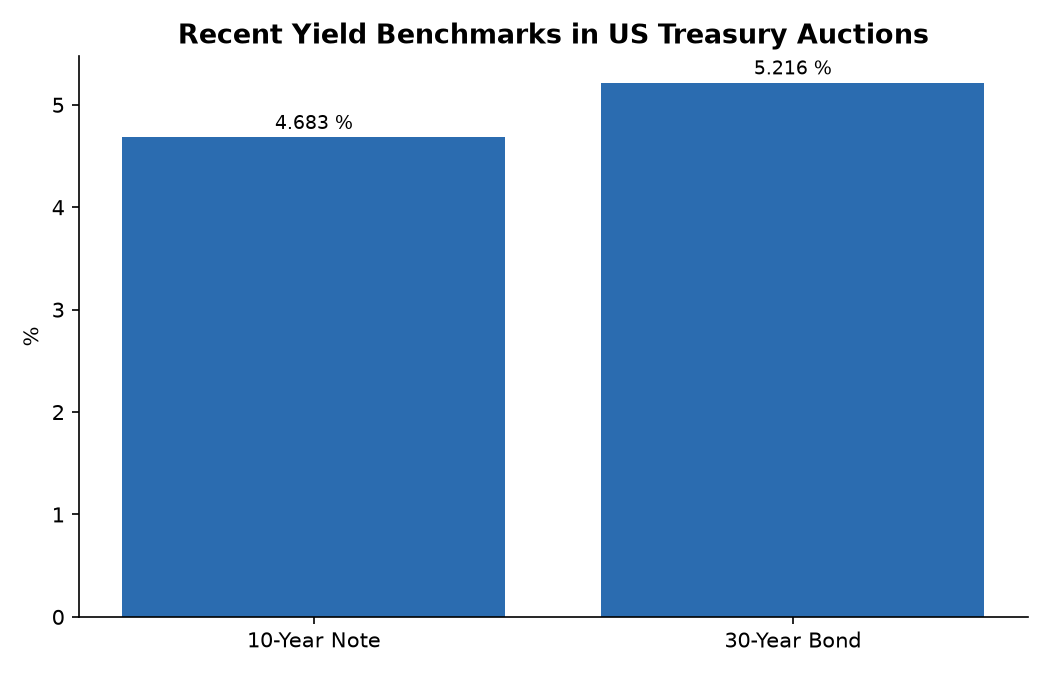
Recent government debt auctions have highlighted this shift in investor appetite. Long-term bonds, which are particularly sensitive to future economic stability, have seen yields climb to multi-decade highs. This movement reflects a cautious approach from major market participants who must weigh the benefits of holding government debt against the risks of inflation and rising supply.
- 10-Year Notes: Recent auctions have seen yields reach levels not seen in nearly two decades.
- 30-Year Bonds: Long-term debt has hit peaks not observed in a quarter-century, reflecting heightened sensitivity to long-term fiscal sustainability.
Despite these rising costs, the demand for US Treasuries remains surprisingly resilient. For institutional investors—such as pension funds and insurance companies—the elevated yields offer a compelling return on what is traditionally considered a risk-free asset. Many of these entities operate under strict mandates that require them to hold government securities regardless of broader market volatility.
Global Implications and Market Dynamics
The current environment is creating a complex feedback loop. As yields rise to attract buyers, the cost of servicing the national debt increases, which in turn expands the deficit and necessitates even more borrowing. This cycle is a primary concern for analysts monitoring global capital flows.
While there are concerns regarding whether international buyers will continue to finance these expanding deficits, current data suggests the market remains functional. US yields continue to offer a significant advantage compared to other developed nations, such as Japan, maintaining the attractiveness of the dollar-denominated assets for global investors. However, the market has clearly repriced the cost of financing the federal government, moving toward a regime of higher interest rates to compensate for the increasing fiscal burden.