


Understanding the New Trump Account Incentives
For parents looking to give their children a head start, the newly introduced Trump Accounts offer a compelling incentive structure. Designed for U.S. citizens under the age of 18, these accounts feature a significant government-backed boost to encourage early saving.
Under the current guidelines, children born between 2025 and 2028 will receive an initial government deposit of $1,000. Furthermore, families living in areas with a median income below $150,000 may receive an additional $250 through philanthropic contributions, making it an incredibly accessible way to jump-start a child’s investment portfolio.
The Power of Compound Interest and Contributions
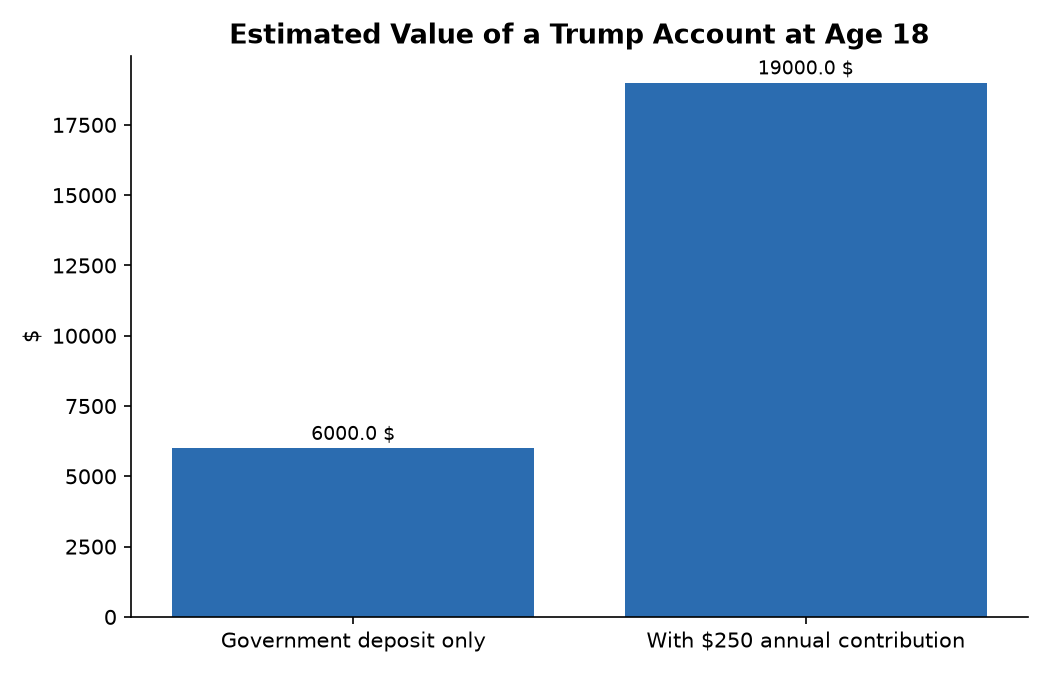
While the initial government deposit is a significant windfall, the real magic lies in long-term growth. Projections suggest that the initial $1,000 deposit could grow to approximately $6,000 by the time the child reaches age 18 through market returns.
For parents willing to add to the fund, the impact is even more dramatic. By contributing a modest $250 annually, a child’s account could potentially reach an estimated $19,000 by their 18th birthday. This highlights the massive advantage of early intervention and consistent investment habits.
Key Features at a Glance:
- Government Boost: $1,000 for qualifying newborns.
- Income-Based Bonus: Extra $250 for lower-to-middle-income ZIP codes.
- Employer Contributions: Companies can contribute up to $2,500 annually as a benefit.
- Flexible Withdrawals: Early access is permitted for specific needs like college or first-time home purchases, though these may be taxed.
Trump Accounts vs. 529 Plans: Which is Better?
Choosing the right vehicle depends heavily on your primary goal: education or retirement. While Trump Accounts are often marketed as a retirement tool, they are not without drawbacks compared to specialized education savings plans.
The primary difference lies in tax efficiency. A 529 plan is specifically designed for education, allowing for tax-free growth and tax-free withdrawals when used for qualified educational expenses. In contrast, Trump Accounts are taxed on distributions, meaning the growth is subject to ordinary income tax rates upon withdrawal.
Essentially, while a Trump Account provides an excellent « free money » starting point, it lacks the tax-advantaged growth profile of a 529 plan. For parents focused strictly on college savings, the 529 remains a powerhouse. However, for those looking to build a general wealth nest egg that can be accessed for various life milestones, the Trump Account offers a unique hybrid utility.
Strategic Planning for Parents
A balanced approach may be the most effective strategy. Many financial experts suggest a dual-track method: utilizing the Trump Account to capture the government’s $1,000 contribution, while simultaneously funding a 529 plan to ensure education costs are covered with maximum tax efficiency.
Ultimately, there is no one-size-fits-all solution. Parents should evaluate their specific financial situation and long-term objectives before deciding how to distribute their resources between these different investment vehicles.