


The Hidden Financial Shock of Losing a Spouse’s Social Security Check
For millions of retired couples, Social Security forms the backbone of monthly income. Yet few realize that the death of one spouse can trigger an immediate and often dramatic drop in household benefits — sometimes cutting total income nearly in half.
The reason is straightforward: the surviving spouse receives only the higher of their own benefit or the deceased spouse’s benefit, not both. When both partners were collecting substantial checks, the loss can be severe and long-lasting, while everyday expenses like housing, utilities, and insurance barely budge.
Understanding the Income Gap
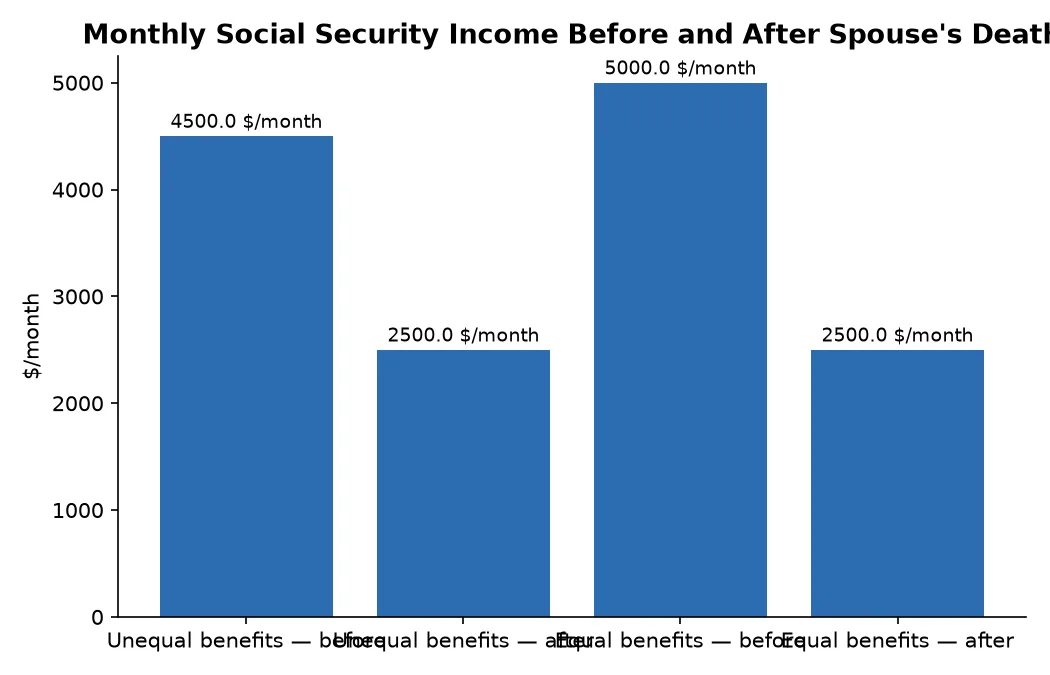
Consider two couples collecting different benefit amounts. A couple where one partner receives $2,500 per month and the other receives $2,000 would see their combined $4,500 monthly income fall to $2,500 after a death — a loss of nearly 45%. If both partners receive $2,500 each, the combined $5,000 drops to $2,500 — a flat 50% reduction.
These cuts can persist for decades, especially if the surviving spouse is younger and in good health. The financial strain compounds at a time when emotional stress is already overwhelming.
How a Joint Lifetime Income Annuity Works
A joint lifetime income annuity is one of the most direct tools for offsetting this gap. With a single lump-sum deposit, the contract guarantees a steady stream of income for as long as either spouse lives. After one partner passes, the surviving spouse continues receiving the same payment — effectively creating a private pension that fills the Social Security shortfall.
Buyers choose when payments begin at the time of purchase, though some contracts offer flexibility to adjust the start date later.
Deferred vs. Immediate Annuities
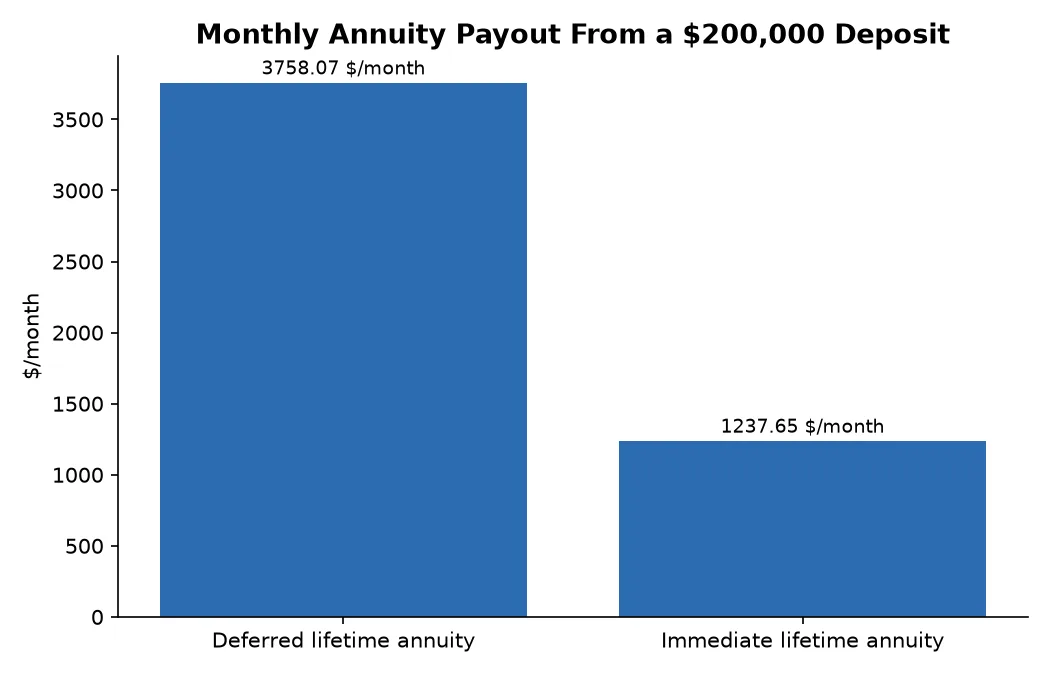
Couples can opt for a deferred income annuity, delaying payments to a future date. The longer the deferral period, the larger the eventual monthly checks become. For healthy 67-year-olds who deposit $200,000 and defer payments until age 80, the payout can reach approximately $3,758 per month — with only a portion subject to income tax, since part of each payment is treated as a return of principal.
An immediate income annuity, by contrast, starts paying out shortly after the deposit. The same $200,000 deposit in a joint immediate annuity might generate around $1,238 per month. For couples where one partner is in poor health, this option provides a quicker financial cushion without requiring a medical exam — annuity issuers typically do not consider health status.
Fixed Indexed Annuities with an Income Rider
A fixed indexed annuity offers a more flexible path to guaranteed income. These products credit interest based on a market index — such as the S&P 500 or the Dow Jones Industrial Average — while protecting the principal from market losses. By adding a guaranteed lifetime income rider, the contract holder can start payments at any time, regardless of when the annuity was purchased.
The key advantage is that the contract retains its cash surrender value even after income payments begin. Unlike traditional annuities, where annuitization zeroes out the cash value, an indexed annuity with a rider lets the owner access accumulated value while still collecting lifetime income.
However, this flexibility comes at a cost. Insurers typically charge around 1% annually on the account value for the income rider, which slows overall growth. The income account value grows at a guaranteed compounded rate between 4% and 8% annually, and the eventual payment amount depends on the account value along with the holder’s age and gender at the time income begins.
Important Trade-Offs to Weigh
Traditional income annuities generally have no cash surrender value — you exchange a lump sum for a guaranteed income stream, much like a private pension. Once the principal is fully repaid through payments, any continued income becomes fully taxable, which is where the longevity insurance aspect becomes most valuable.
Fixed indexed annuities also carry interest rate risk. During prolonged market downturns, the contract value may earn little or nothing for extended periods. Still, the combination of downside protection, cash value access, and flexible income start dates makes them a compelling option for many retirees.
Finding the Right Fit
There is no one-size-fits-all solution. Some couples will benefit from the simplicity and higher initial payouts of a traditional income annuity, while others will prefer the flexibility and cash value retention of an indexed annuity with a rider. Couples where one spouse is significantly younger may face more complex planning decisions, but the core principles remain the same.
The bottom line: a thoughtful annuity strategy can transform a devastating income drop into a manageable transition, giving surviving spouses financial stability when they need it most.