


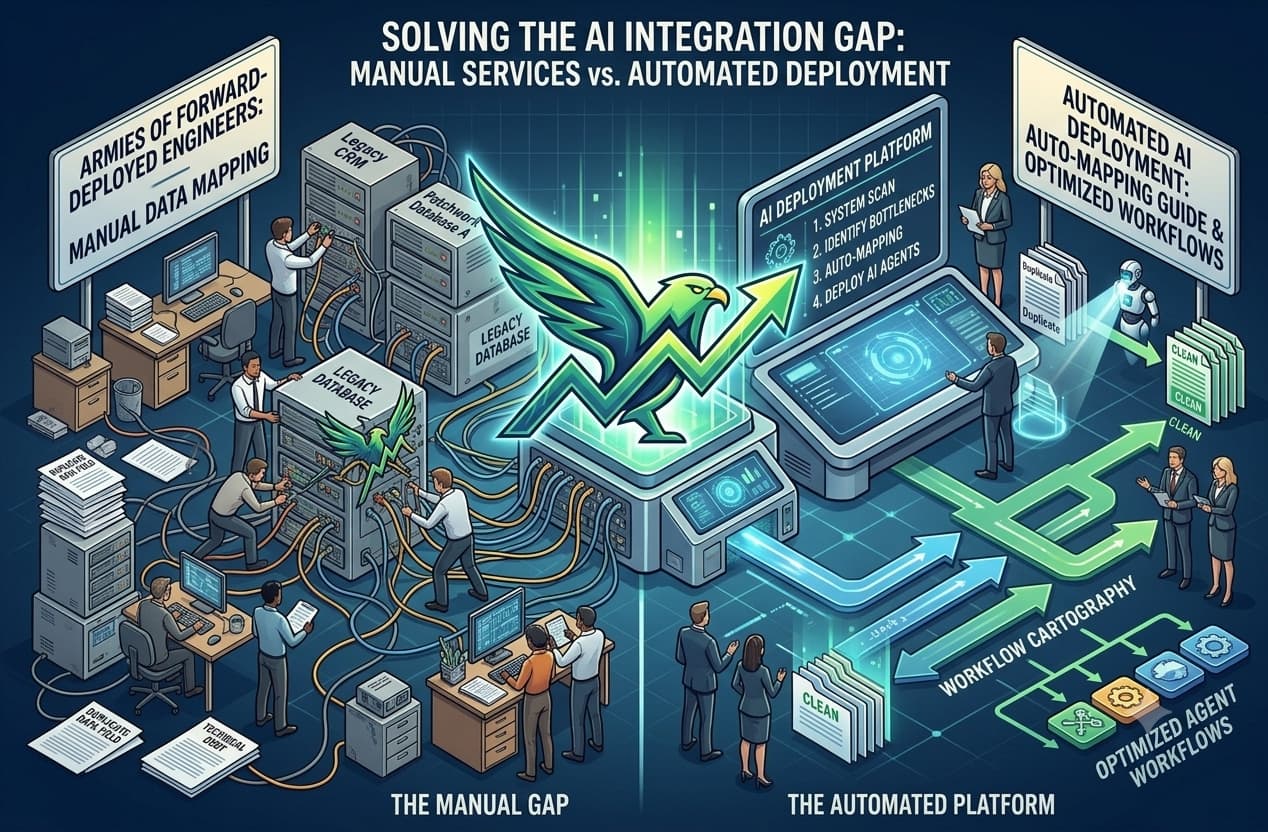
The Hidden Hurdle: Legacy Systems and Data Fragmentation
The promise of Artificial Intelligence in the corporate world is immense, yet many Fortune 500 companies are hitting a significant wall: implementation. It is one thing to build a sophisticated AI model; it is quite another to make that model function within a massive, existing corporate infrastructure.
Large organizations typically rely on a patchwork of data management platforms, CRM systems, and legacy databases. This environment is often characterized by technical debt, duplicate data fields, and fragmented workflows. Consequently, instead of seeing immediate ROI, companies are finding themselves forced to hire armies of specialized engineers—often referred to as forward-deployed engineers—to manually bridge the gap between AI tools and existing software.
From Manual Services to Automated Integration
The current trend in the industry has been to solve AI deployment through human capital, increasing headcount to manage the complexity of integration. However, a new approach is emerging to disrupt this cycle. Rather than relying on expensive, long-term consulting projects, new platforms are being designed to scan existing systems, identify bottlenecks, and map out the exact steps needed for successful AI deployment.
This new generation of tools aims to provide a clear, automated roadmap for enterprises. Instead of spending weeks in meetings with architects to figure out how to connect an AI agent to a database, these platforms can:
- Identify and remove duplicate data fields.
- Map complex business processes automatically.
- Provide step-by-step guides for connecting to various data sources.
- Build optimized, agent-powered workflows that integrate directly into communication channels.