


An Unprecedented Spending Surge
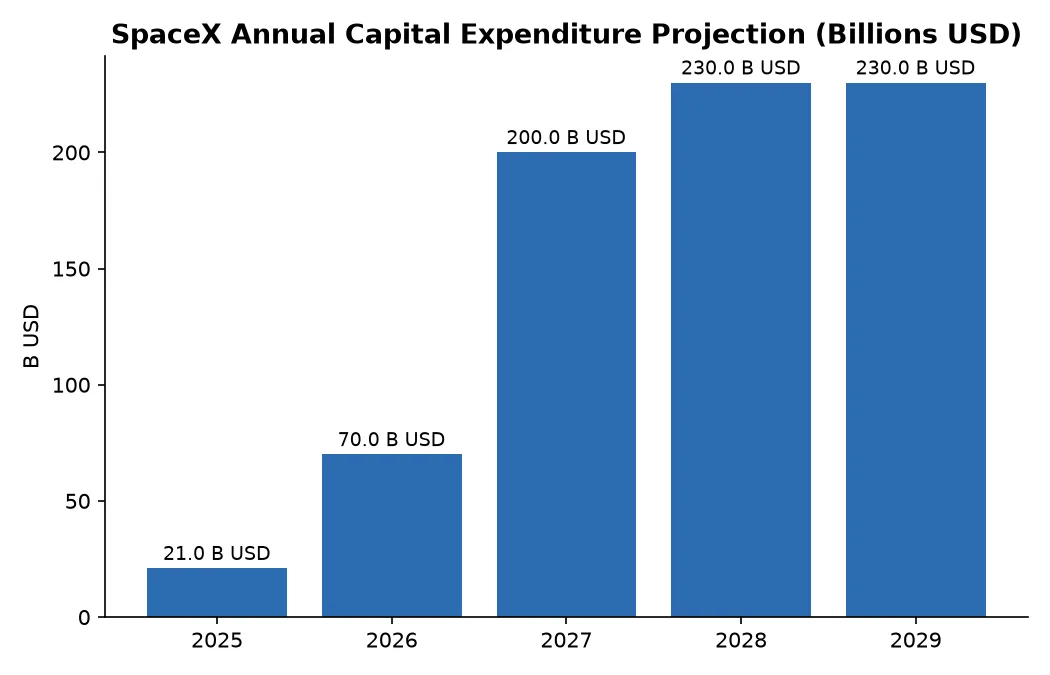
SpaceX’s capital expenditure trajectory reads like a hype curve. After spending roughly $21 billion in 2025, the company jumped to nearly $70 billion this year and is projected to approach $200 billion in the coming year. For context, just one quarter’s AI-related capex alone hit $16 billion through June.
The scale puts SpaceX in the same league as the biggest AI infrastructure players on the planet. Four major tech giants — Amazon, Alphabet, Meta, and Microsoft — are collectively expected to spend over $700 billion this year on AI-related infrastructure, and that figure is only going higher.
What’s Being Built
The spending spree covers a sprawling list of ambitions:
- A $100 billion launch facility in Vermilion Parish, Louisiana, with five launch complexes and the capacity to support thousands of launches annually once operational.
- Terafab, a massive semiconductor plant already under construction with a $17 billion initial investment.
- Ground-based AI data centers to feed the growing compute demand.
- Next-generation rockets and orbital infrastructure.
The Revenue Story
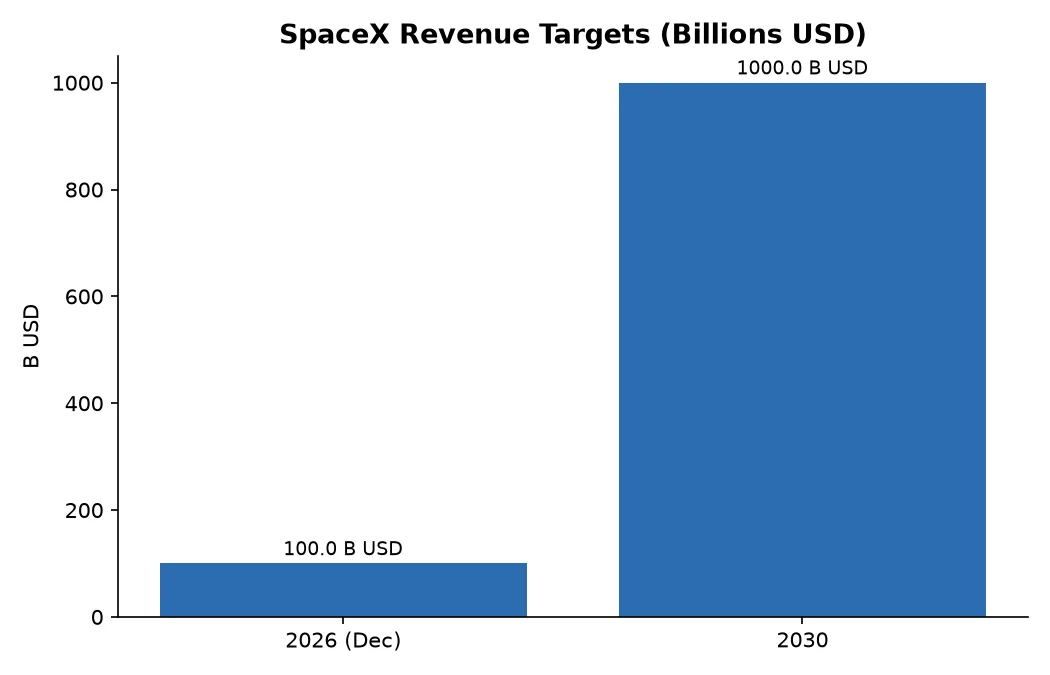
SpaceX says it is on track to reach $100 billion in annual revenue by December, driven largely by its Starlink broadband service and rapidly growing AI-related sales. Internal projections cited by CEO Elon Musk point toward $1 trillion in yearly revenue by 2030 — a figure that would be extraordinary if realized, but remains deeply speculative.
The company’s roughly $100 billion cash reserve, largely raised through a blockbuster IPO earlier this year, provides a cushion that most startups can only dream of. That financial firepower is what makes the ambitious building spree possible.
The Risk Side of the Ledger
Behind the bold numbers lie serious uncertainties. Many of SpaceX’s projects target markets that are still unproven — orbital data centers, for instance, face both technological and business-model unknowns. Customer demand and revenue streams for some of these ventures could take years to materialize, if they ever do.
The strategy is essentially a high-stakes wager: build the infrastructure now, bet that demand for rocket launches, orbital compute, AI capacity, and chips will follow. It’s a playbook familiar from the early days of cloud computing, but one that required deep pockets and patience — resources most companies don’t have.
What Comes Next
Analysts project SpaceX’s annual capex will hover around $230 billion in both 2028 and 2029, and many expect the actual figure to exceed those estimates. The company is essentially deploying its rocket-engineering talent across industries — Musk has even floated building turbine blades to power the firm’s expanding AI data centers.
For investors and observers, the headline is clear: SpaceX is transforming itself from a launch provider into a multi-industry infrastructure giant. Whether that transformation delivers returns or becomes a cautionary tale of overreach will take years to answer.