

Geopolitical Shockwaves Rattle Equity Markets
All three major U.S. stock indexes finished August in negative territory as military tensions in the Middle East intensified. The United States launched strikes against Iran for the first time in a month, prompting retaliatory attacks on neighboring Jordan and the United Arab Emirates. The escalation drove crude oil prices sharply higher and rattled bond markets simultaneously.
West Texas Intermediate crude futures climbed 3.0% to settle at $85.92 per barrel, reflecting growing concerns over energy supply disruptions in the region. The simultaneous sell-off in equities and bonds underscored the breadth of investor anxiety.
Treasury Yields Reach Multi-Month Highs
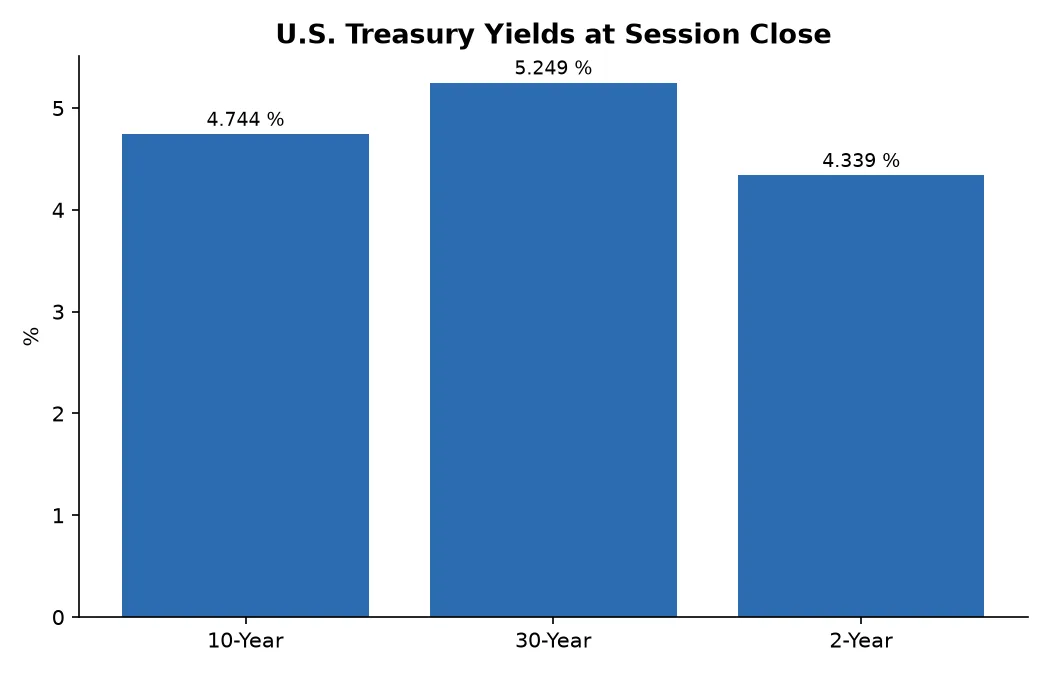
The bond market reacted forcefully to the geopolitical upheaval. The 10-year Treasury yield rose to 4.744%, up from 4.722% the previous session, touching an intraday peak of 4.768% — its highest level in 19 months. The 30-year yield climbed to 5.249%, while the more rate-sensitive 2-year yield edged slightly lower to 4.339%.
The widening gap between short-term and long-term yields reflected a market torn between immediate safe-haven demand and longer-term inflation concerns fueled by higher energy costs.
Fed Signals Hawkish Stance Ahead of September Meeting
The Federal Reserve chair reinforced commitments to price stability during a keynote address at the Jackson Hole Economic Symposium, stating that the central bank would have significant work ahead should inflation fail to approach its 2% target at a sufficient pace. Market participants now await the August jobs report, due later in the week, which could further shape the Fed’s calculus.
Stronger-than-expected labor data, paradoxically, could be viewed negatively by markets if it reinforces expectations for tighter monetary policy. Futures pricing indicated a 66.1% probability of a 25-basis-point rate increase at the September 15-16 Federal Open Market Committee meeting, up from 57.0% just days earlier.
Index Performance: Daily Losses, Monthly Gains
Despite the down day, August still delivered positive returns for major indexes. The Dow Jones Industrial Average fell 0.7% to close at 53,185, while the S&P 500 declined 0.3% to 7,686. The Nasdaq Composite slipped 0.1% to 26,370. On a monthly basis, however, the Dow gained 1.3%, the S&P 500 rose 2.6%, and the Nasdaq advanced 3.9%.
Apple Prepares for Historic Leadership Transition
Apple shares declined 0.9% on the session, but the company dominated headlines for a different reason. The iPhone maker’s longtime chief executive announced he would step down from the role, effective the following day, while remaining as executive chairman. His successor, John Ternus, a 50-year-old engineering veteran, takes the helm at a time when Apple is racing to compete in artificial intelligence.
Under the departing executive’s leadership spanning roughly 15 years, Apple’s stock delivered extraordinary returns exceeding 2,740%. The company also executed multiple stock splits, joined the Dow Jones Industrial Average, and became the world’s most valuable company by market capitalization for an extended period.
California Utility Stocks Crater on Wildfire Legislation
Two of the S&P 500’s worst performers came from the California utility sector. Edison International plunged 22.9% and PG&E dropped 20.0% after the state legislature passed a wildfire liability bill that excluded the protections utilities had sought. The final legislation left out proposals from the governor that would have limited utility payouts to insurance companies and other claimants affected by wildfire damages tied to electrical infrastructure.