

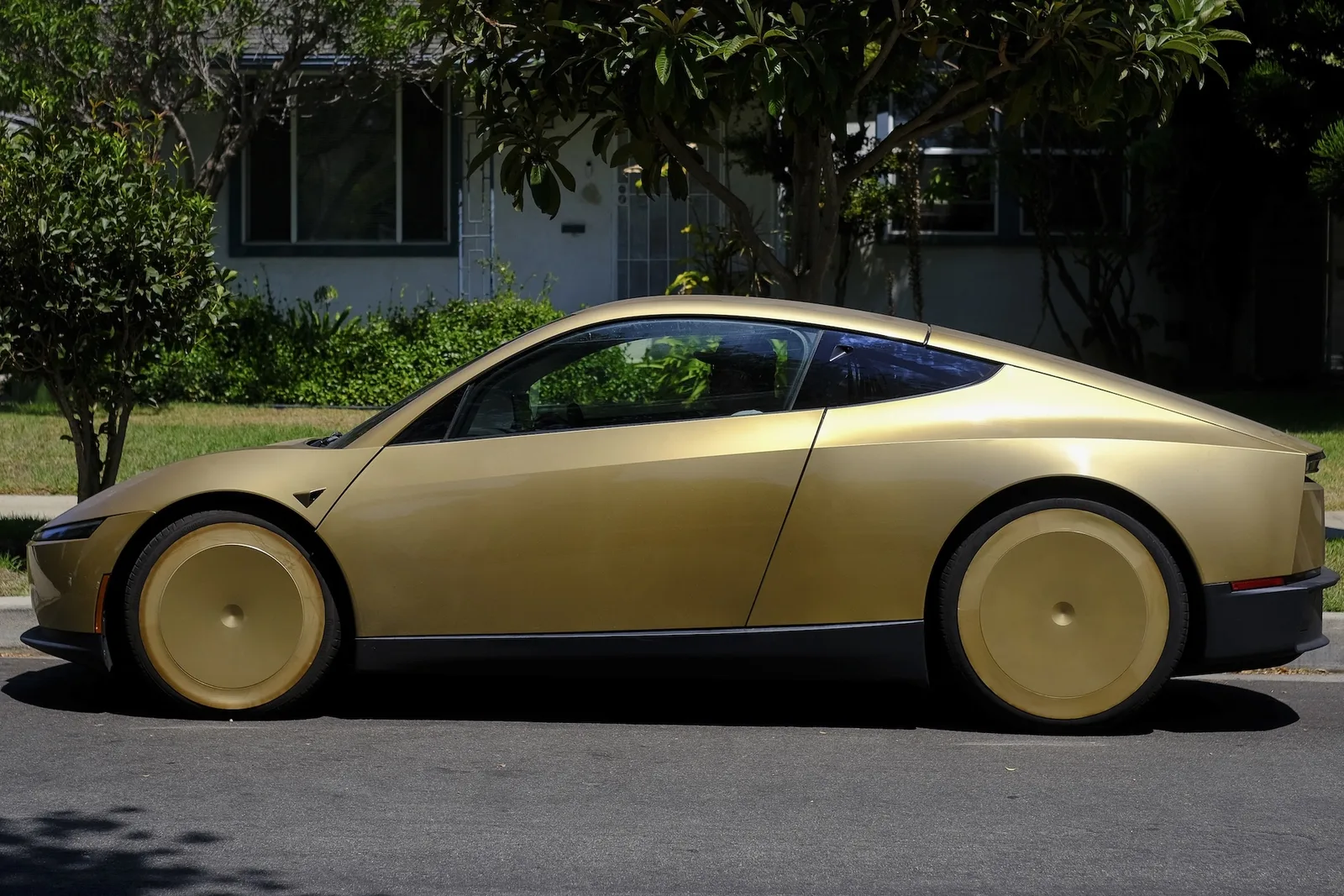
Tesla’s Driverless Taxi Hits a Regulatory Roadblock
The Tesla Cybercab made its debut on Austin roads this week, marking a pivotal moment for autonomous vehicle ambitions — but the rollout got off to a rocky start. Hours after the driverless taxis appeared on public streets, the National Highway Traffic Safety Administration launched a safety investigation. The vehicles, which notably lack steering wheels and pedals, raise fundamental questions about compliance with federal safety standards that currently mandate manual controls. While the Department of Transportation has proposed rolling back those requirements for vehicles designed to drive themselves, the rule change is not yet finalized, leaving Tesla in a regulatory gray zone.
Wall Street’s Lukewarm Response
Wall Street’s reaction to Tesla’s event was notably subdued. The Austin gathering was unusually quiet compared to past Tesla showcases, and CEO Elon Musk notably skipped the event entirely — a striking absence from a company whose valuation argument has long rested on its robotics and AI roadmap. The disconnect between Musk’s vision and the market’s skepticism was palpable.
Scale Remains the Real Test
The real benchmark for Tesla remains whether it can deploy a robotaxi service safely and at meaningful scale. As of now, the company has registered just 45 Cybercabs in Texas, a figure that pales in comparison with competitors already operating at scale. Waymo, Alphabet’s autonomous vehicle division, seized the moment to argue that pure end-to-end AI systems aren’t yet safe enough without sensor redundancy. The company expanded its public robotaxi service to Denver, San Diego, and Tampa, while Zoox extended its Las Vegas operations to include rides to and from Harry Reid International Airport. In Japan, May Mobility and NTT Mobility plan to deploy Toyota’s e-Palette autonomous vehicles on public roads this year, signaling that international markets are heating up.
Mobility Startups Keep Raising
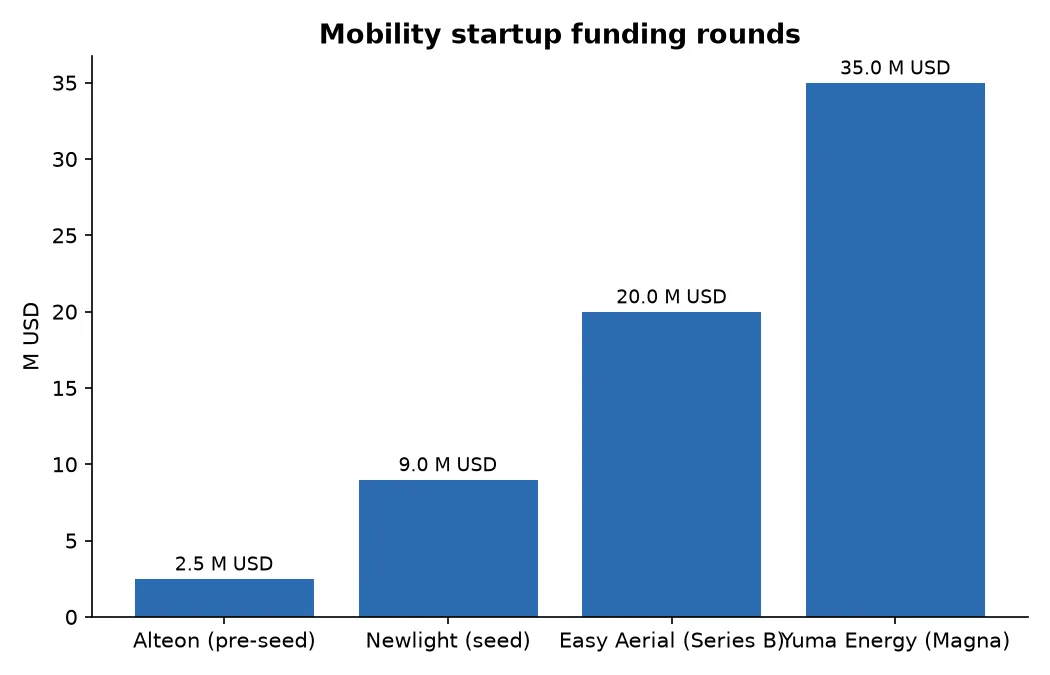
The funding landscape for mobility startups remained active. A Bengaluru-based startup building autonomous aircraft powered by dynamic soaring techniques raised $2.5 million in a pre-seed round. Easy Aerial, which builds autonomous tethered drone systems for surveillance, closed a $20 million Series B led by Insight Partners. Newlight, a Bay Area company developing hydrogen injection systems for cargo ships, secured $9 million in seed funding from a mix of venture and government-backed investors. Magna International added $35 million to its existing stake in Yuma Energy, a Bengaluru firm operating battery-swapping infrastructure for electric two- and three-wheelers — a sector that’s gaining traction in emerging markets.
M&A and Restructuring Shake Up the Sector
On the corporate front, Delivery Hero’s board approved Uber’s $15 billion takeover offer and recommended shareholder approval, signaling a major consolidation in the mobility and delivery space. Across the Atlantic, Allianz is reportedly in talks to acquire AA, the U.K. roadside assistance provider, for approximately £5 billion ($6.77 billion), a move that could reshape the European breakdown assistance market.
Uber also announced a significant restructuring, cutting roughly 3,300 jobs — about 10% of its global workforce — by trimming management layers and merging its engineering, science, and delivery divisions. The layoffs underscore the pressures facing gig-economy platforms as they pursue profitability.
Other Moves in the Mobility Space
Florida and Texas have both discontinued their use of Flock’s license plate reader technology amid growing privacy concerns and reports of misuse. Pivotal, the flying car company backed by Larry Page, saw its CEO Ken Karklin depart, with board member Mike Ross stepping in as interim leader. And Spanish microcar startup Liux is positioning itself as a sustainable alternative in the compact EV segment, targeting urban drivers who prioritize environmental impact.
A Hybrid Counterpoint
On the traditional auto front, the 2027 Kia Telluride hybrid X-Line SX-Prestige offers an interesting counterpoint to the EV-only narrative. Priced at $61,180 fully loaded, the turbocharged 2.5-liter hybrid delivers 329 horsepower and 339 pound-feet of torque — more power than its non-hybrid sibling while achieving 31 mpg combined. The interior UX includes a row of physical controls beneath the touchscreen, though the steering-column stalk gear shifter may take some getting used to. For buyers not ready to go fully electric, the Telluride hybrid proves that efficient powertrains don’t have to mean sacrificing space or performance.