


The Myth of the Seamless Pivot
As generative AI continues to advance, the conversation around job displacement has increasingly focused on a single recommendation: workers should learn a trade. While the demand for skilled labor in sectors like electrical work and HVAC maintenance is undeniably growing, treating the trades as a catch-all safety net for white-collar workers is an oversimplification of a complex economic shift.
The reality is that moving from a high-level cognitive career to manual, physically demanding labor is not a simple matter of technical retraining. It represents a fundamental reset of a professional’s lifestyle, social identity, and long-term financial trajectory.
The Economic Reality of Career Re-entry
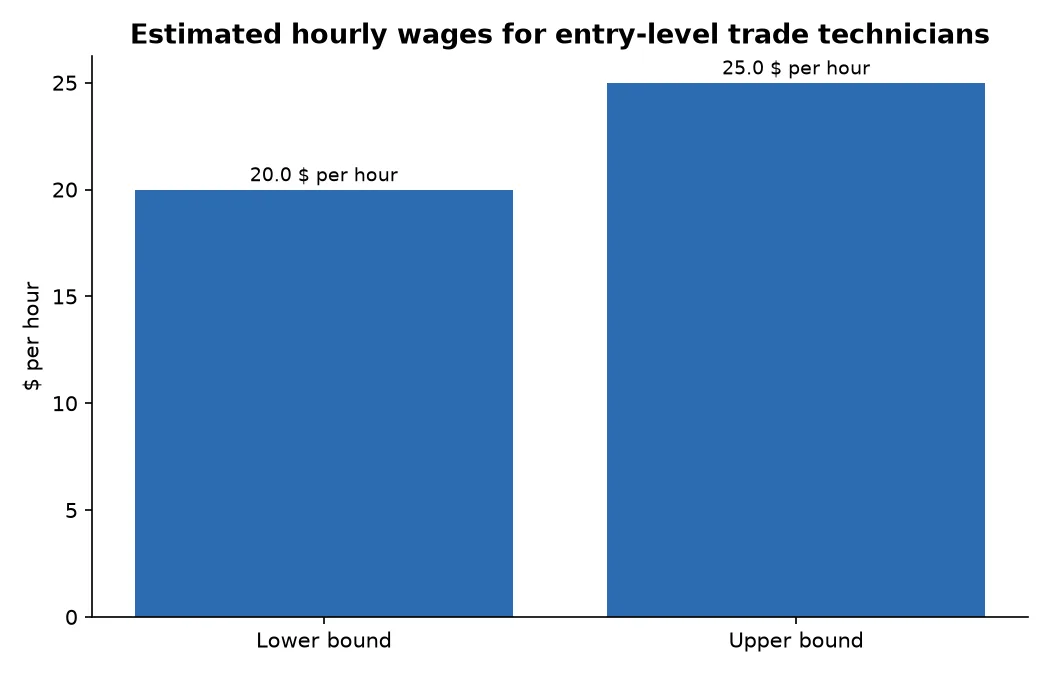
For many professionals, the transition involves more than just learning new skills; it involves a significant drop in earning potential. A mid-career professional accustomed to a six-figure salary may find themselves entering a new field at an entry-level wage, which can be significantly lower. This gap creates a massive financial hurdle for individuals who have built households and debt obligations based on their previous income levels.
Consider the following comparison of typical hourly earnings for entry-level roles in technical trades compared to the potential loss for mid-career professionals:
The Hidden Costs of Displacement
Beyond the immediate paycheck, the impact of AI-driven displacement carries psychological and social weight that traditional economic data often fails to capture. White-collar careers are often deeply tied to personal identity and social status. When these roles are disrupted, the resulting instability can affect mental health and family dynamics.
- Loss of Social Identity: Moving from a specialized knowledge role to a manual labor role can disrupt a person’s sense of professional standing.
- Financial Instability: The gap between previous salaries and new trade wages can derail long-term retirement and savings plans.
- Skill Obsolescence: The rapid evolution of AI means that even technical skills can become outdated quickly, making long-term career stability harder to predict.
A Need for a Comprehensive Strategy
If policymakers and corporations want to mitigate the impact of AI, they must move beyond narrow retraining programs. A robust response to large-scale workforce disruption requires a multi-faceted approach:
First, technical certification must be paired with income support to help workers bridge the gap during their transition. Second, mental health and career counseling should be integrated into displacement services to help professionals navigate the loss of their previous professional identities. Finally, we need dynamic education models that can keep pace with the lightning-fast evolution of AI-integrated workflows.
Relying solely on the availability of trade jobs to absorb the displaced white-collar workforce is not a viable long-term strategy. To maintain social and economic stability, the transition must be managed with nuance, empathy, and comprehensive support systems.