


A Record-Breaking Downturn That Caught Many Off Guard
The bond market just wrote a new chapter in financial history — one that most portfolio managers hoped they’d never see. As of early August 2026, a widely tracked U.S. bond index had been underwater for 72 consecutive months, surpassing every prior downturn in both severity and duration. The total decline was roughly double the previous worst episode, and the slump persisted nearly five times longer than any earlier drawdown.
For a generation of investors who entered the market after the early 1980s, this kind of pain was virtually unheard of. Bonds were supposed to be the safe harbor — the part of your portfolio that held steady when equities wobbled. That assumption quietly unraveled over the past several years.
How Decades of Easy Money Set the Stage
The roots of this crisis stretch back further than most people realize. From the early 1980s through 2020, interest rates embarked on one of the longest declining stretches in modern history. Falling rates meant rising bond prices, delivering both steady income and capital gains year after year. It was an extraordinary run — and, as it turned out, a historically unusual one.
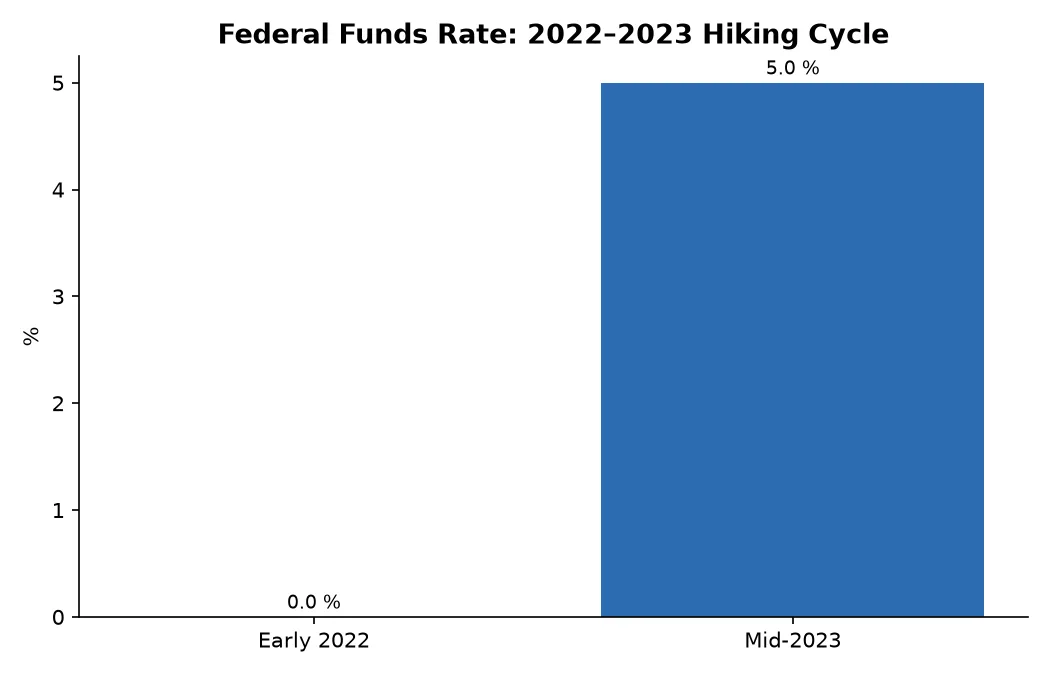
When the post-pandemic inflation surge arrived, the foundations cracked. Massive fiscal stimulus, disrupted supply chains, and tight labor markets pushed prices to their highest level in forty years. The central bank responded with rapid-fire rate increases, lifting short-term borrowing costs from near zero in early 2022 to above 5% by mid-2023.
Because bond prices move in the opposite direction of yields, the rapid ascent in rates hit existing bonds hard. Longer-maturity securities absorbed the heaviest losses, and even high-quality holdings saw declines that would have seemed unthinkable just a few years earlier.
Two Respected Voices, Two Opposing Views
The drawdown has sparked a fierce debate among investment professionals about what comes next — and whether bonds still belong in a modern portfolio.
Some seasoned investors argue that affluent households are over-allocated to fixed income and should lean more heavily into equities. One prominent market thinker suggested that for individuals whose living expenses are already covered by other income streams, a portfolio weighted overwhelmingly toward stocks with a modest cash buffer might make more sense than defaulting to a traditional balanced approach.
Others take the contrarian road. When an asset class becomes universally dismissed, some argue, it warrants a closer examination rather than automatic rejection. Sentiment toward bonds is overwhelmingly negative today, allocations to fixed income have shrunk across many portfolios, and the asset class rarely attracts attention unless rates are climbing. That is precisely the environment where contrarian opportunities tend to hide.
Rethinking Diversification for a New Era
The deeper lesson may not be about bonds specifically — it’s about how we think about diversification as a whole. For years, owning stocks and bonds was synonymous with a diversified portfolio. That framework delivered exceptional results, but markets evolve, and the toolkit available to individual investors has expanded considerably.
Alternative strategies, private markets, and non-traditional assets now offer ways to build resilience that didn’t exist a generation ago. None of this renders the classic balanced portfolio obsolete. It simply means investors should scrutinize their allocations with intention rather than habit.
What History Teaches Us About Patience
Interest rates move in long cycles that can span decades. The forty-year decline that preceded this downturn was just as historically remarkable as the reversal that followed — only it favored bondholders instead of punishing them. Today’s environment might not signal the end of fixed income. It might simply represent a return to a more conventional interest-rate landscape.
Whether inflation remains elevated or yields eventually reward patient holders, one principle endures: diversification across a broad range of assets gives portfolios the best chance of weathering different economic regimes. The markets will always rotate between favor and disfavor. The real skill lies in staying disciplined long enough to spot the turnaround — even when the asset class everyone loves has fallen out of style.