


Understanding Total Return vs. Price Appreciation
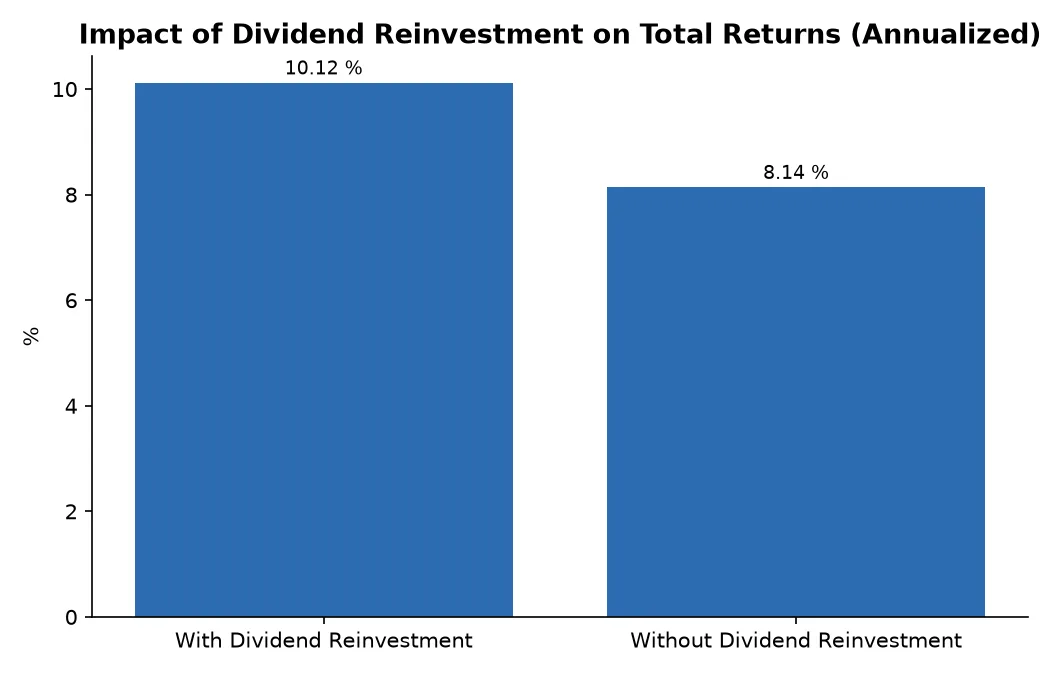
When most people track the stock market, they look at price performance—how much a share price has risen or fallen. However, this only tells half the story. To understand how an investment truly performs, you must look at total return, which accounts for both capital gains and the dividends paid out by the underlying companies.
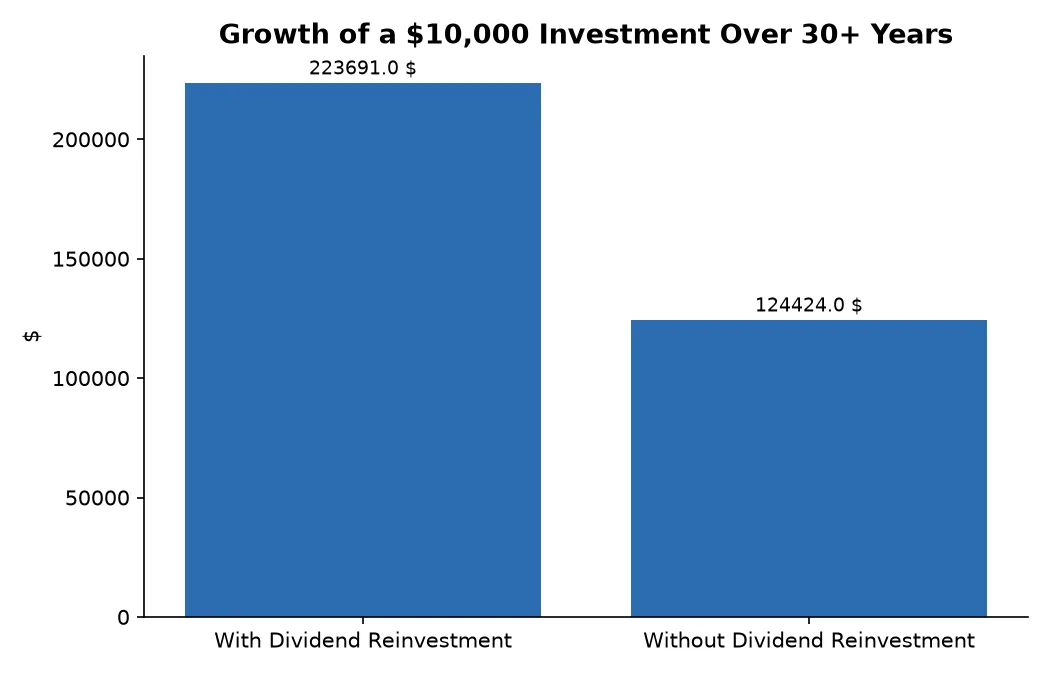
The difference between ignoring dividends and reinvesting them might seem marginal in the short term, but over decades, the gap becomes staggering. Consider a hypothetical scenario where an investor holds a major index fund for over thirty years. An investor who reinvests every cent of dividends could end up with nearly double the wealth compared to someone who simply collects the cash and spends it.
The Snowball Effect: Why Dividend Growth Matters
This phenomenon is driven by compounding. When you reinvest dividends, you aren’t just getting cash; you are purchasing more shares. These new shares, in turn, produce their own dividends, which purchase even more shares. This creates a self-sustaining cycle of growth.
The strategy becomes even more potent when you focus on dividend growth. Companies that consistently increase their payouts year after year are typically signaling financial health. A history of rising dividends often points to a business with strong cash flows, disciplined management, and the ability to navigate various economic cycles.
How to Select the Right Dividend Growth ETFs
Because not all « dividend » funds are created equal, investors must look closely at the index methodology. Some funds may focus on high current yields or general quality metrics, but they might not specifically prioritize the consistent growth of those payouts. To build a robust portfolio, you should evaluate ETFs based on three critical pillars:
- Expense Ratios: Since dividend growth strategies are generally rules-based and low-turnover, there is no reason to pay high management fees. Look for low-cost options that preserve your capital.
- Liquidity: High liquidity, often measured by tight bid-ask spreads, ensures that you can enter and exit positions without significant transaction costs.
- Scale and Stability: Larger funds with significant assets under management (AUM) tend to be more stable and less prone to closure, providing peace of mind for long-term holders.
By focusing on these criteria, investors can find specialized tools designed to capture the compounding power of growing companies, turning modest initial investments into significant long-term assets.