

The Psychology of the ‘Invisible’ Expense
Most people don’t go bankrupt from a single large purchase; instead, they experience a slow financial drain caused by what experts call ‘micro-spending.’ These are the $5 coffees, the $10 delivery fees, and the small in-app upgrades that seem harmless in isolation but aggregate into substantial annual costs.
Why is it so easy to justify these costs? Several psychological mechanisms are at play:
- The Denomination Effect: Humans tend to perceive smaller amounts of money as less significant, making us more willing to part with several small bills than one large one of equal value.
- Mental Accounting: We often categorize money into separate ‘buckets’ like groceries or fun. Minor purchases often slip into the ‘fun’ or ‘miscellaneous’ bucket, where we are less disciplined about tracking them.
- Frictionless Payments: Modern digital interfaces are designed to reduce the ‘pain of paying.’ By removing the physical act of handing over cash or waiting for a transaction to process, technology turns a conscious decision into an automatic habit.
The Compound Effect of Small Habits
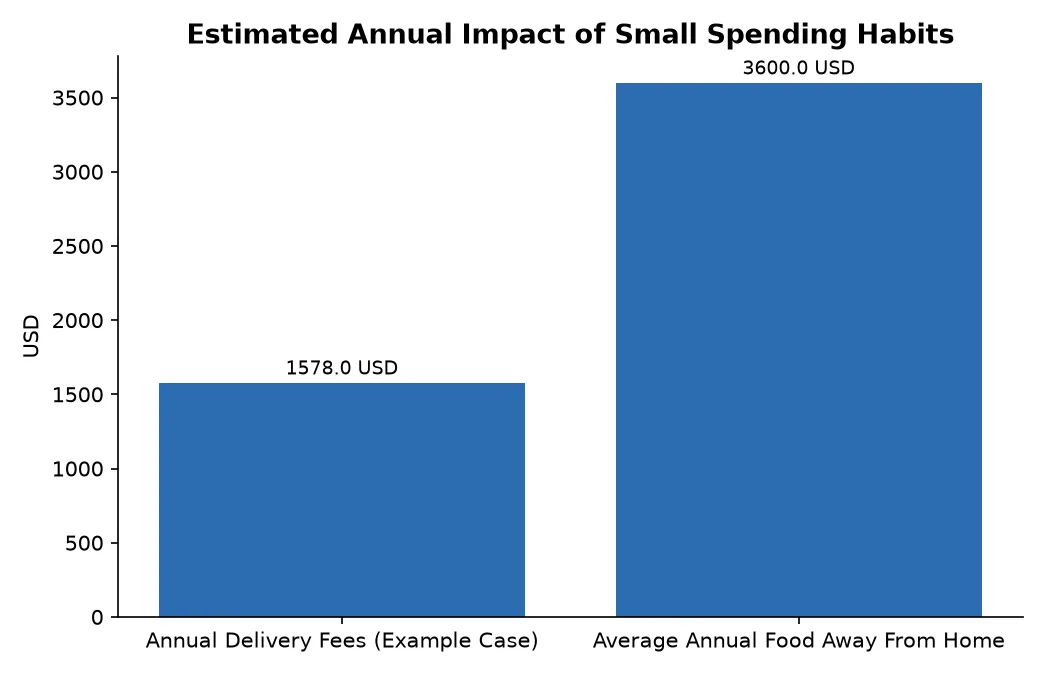
To understand the impact, consider a common modern routine: frequent food delivery. While a single delivery fee might seem negligible, the cumulative effect is striking. If a consumer consistently pays small fees for convenience, they might find themselves spending over $1,500 annually just on the service fees themselves, excluding the actual cost of the food.
This trend is reflected in broader economic data, which shows that average household spending on dining out and prepared foods has reached significant levels, often exceeding $3,600 per year for many families. These frequent, small swipes represent a massive portion of discretionary spending.
Practical Strategies to Reclaim Your Budget
Breaking the cycle of impulsive micro-spending doesn’t require extreme deprivation. It requires introducing intentionality back into your financial decisions.
1. Create Artificial Friction
Digital convenience is your enemy when trying to save. Disable ‘one-click’ ordering on shopping sites and remove your saved credit card information from frequently used apps. Forcing yourself to manually enter details or find your wallet creates a vital pause between impulse and action.
2. Implement the ‘Wait-and-Watch’ Rule
For any non-essential purchase, commit to a 24-hour waiting period. Most of the chemical dopamine rush that accompanies an impulse buy fades within a few hours, allowing your rational mind to take back control.
3. Use Micro-Budgets
Instead of trying to track every single cent, set a weekly ‘miscellaneous’ cap. For example, allow yourself $30 a week for snacks, coffee, or small treats. Once that limit is reached, you must wait until the following week. This shifts the focus from ‘Can I afford this?’ to ‘Do I want to use my weekly allowance on this?’
4. Connect Spending to Real Goals
Every time you are tempted by a small purchase, perform a mental trade-off. Ask yourself: ‘Is this $7 latte worth delaying my progress toward my vacation fund or my emergency savings by a day?’ Giving your money a specific purpose makes it harder to waste it on trivialities.