

The Shift Toward Agentic Development
For years, software development has followed a predictable pattern of manual coding, testing, and deployment. However, the advent of generative AI is forcing a fundamental rethink of how engineering organizations operate. We are seeing the emergence of the ‘oftware factory’—a conceptual framework where AI agents handle the repetitive, heavy lifting of the development lifecycle.
In this model, instead of humans performing every step manually, an ‘agent loop’ is established. This loop navigates the standard phases of engineering—from initial triage and specification to implementation, review, and verification—using autonomous AI agents to execute tasks.
Bridging the Infrastructure Gap
While large-scale tech giants have already begun building proprietary systems to automate their internal codebases, many mid-sized companies face a significant barrier. Building the infrastructure required to manage AI agents is a massive undertaking involving cloud deployment, agent memory, and complex evaluation frameworks.
New tools are entering the market to act as an infrastructure layer, providing a ready-to-use environment for these agentic workflows. These platforms aim to simplify the transition by offering:
- Seamless Integration: Plugging directly into existing project management tools like Jira or Linear, and communication platforms like Slack.
- Model Agnostic Architectures: Allowing developers to choose their preferred AI models, whether they are using Claude or other leading large language models.
- Performance Monitoring: Providing managers with visibility into agent productivity and total token consumption.
Human-AI Collaboration, Not Replacement
A common misconception is that these automated factories are designed to replace software engineers. In reality, the goal is to foster a collaborative environment where humans oversee a new ‘agentic workforce.’
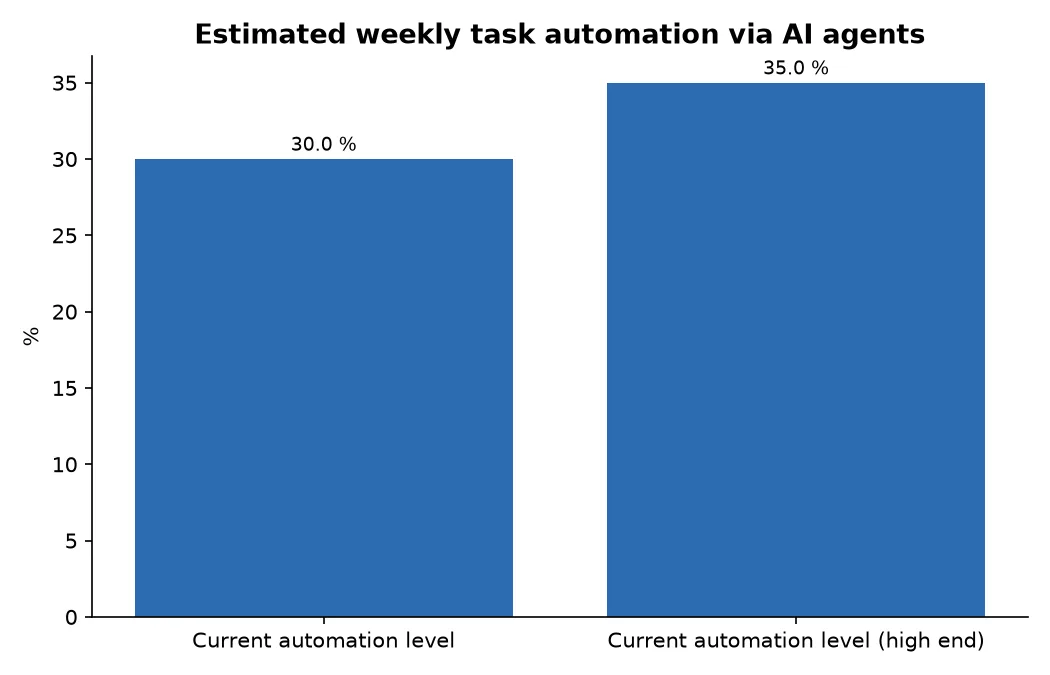
Current estimates suggest that AI automation is currently handling roughly one-third of routine engineering tasks on a weekly basis. However, as context windows expand and model reasoning improves, the percentage of automated tasks is expected to grow significantly, allowing engineers to focus on higher-level architectural decisions and complex problem-solving.
The Future of Engineering Efficiency
The transition to software factories represents a shift from manual task execution to system orchestration. As the infrastructure becomes more robust and self-improving, the boundary between human-written code and agent-generated code will likely blur, leading to unprecedented speeds in software deployment and iteration.