
What the Charges Allege
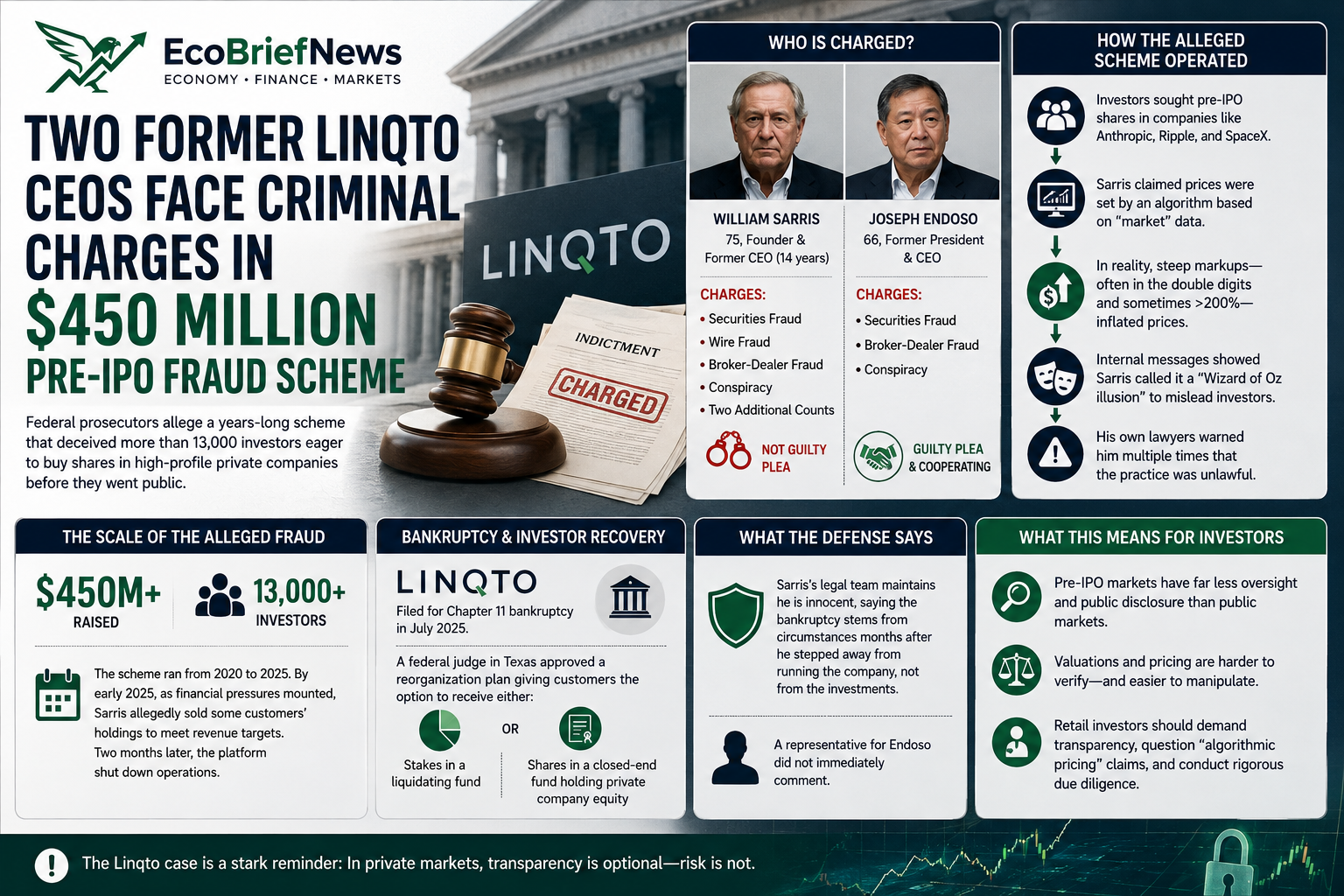
Federal prosecutors in Manhattan announced criminal charges against William Sarris, the 75-year-old founder who led the platform for 14 years, and Joseph Endoso, 66, who took over as chief executive after serving as president. Sarris faces six counts including securities fraud, wire fraud, broker-dealer fraud, and conspiracy. Endoso pleaded guilty to securities fraud, broker-dealer fraud, and conspiracy, and is now cooperating with investigators.
How the Alleged Scheme Operated
Prosecutors say the fraud ran from 2020 through 2025, targeting investors eager to buy shares in high-profile private companies such as Anthropic, Ripple, and SpaceX before those firms went public. Sarris allegedly told buyers they were purchasing at algorithm-determined « market » prices, but in reality imposed steep markups — often in the double digits and sometimes exceeding 200 percent — to inflate the value of his own stake in the company.
Internal communications reportedly revealed Sarris privately mocking his own sales pitch, describing the pricing mechanism as a « Wizard of Oz » illusion designed to distract investors from how prices were actually set. His legal team had allegedly warned him on multiple occasions that the practice was unlawful.
Scale of the Alleged Fraud
The operation drew in more than $450 million from over 13,000 investors, according to court filings. By early 2025, as the platform’s financial pressures mounted, Sarris reportedly began selling off some customers’ holdings to meet revenue targets. Two months later, the platform halted all operations.
Bankruptcy and Investor Recovery
Linqto filed for Chapter 11 bankruptcy protection in July 2025. A federal judge in Texas subsequently approved a reorganization plan that gave affected customers the option to receive either stakes in a liquidating fund or shares in a closed-end fund holding private company equity.
Sarris’s legal counsel has maintained his client’s innocence, arguing that the bankruptcy stems from circumstances months after Sarris stepped away from running the company, not from the investments themselves. A representative for Endoso did not immediately comment on the proceedings.
What This Means for Private-Market Investors
The case underscores a longstanding risk in pre-IPO investing: private companies face far less regulatory oversight and public disclosure than publicly traded firms, making it significantly harder for individuals to verify valuations or pricing fairness. Experts note that retail investors drawn to the promise of early access to high-growth startups should exercise heightened scrutiny, particularly when platforms claim algorithmic pricing transparency without independent verification.