


Uber Unveils sweeping Workforce Reduction
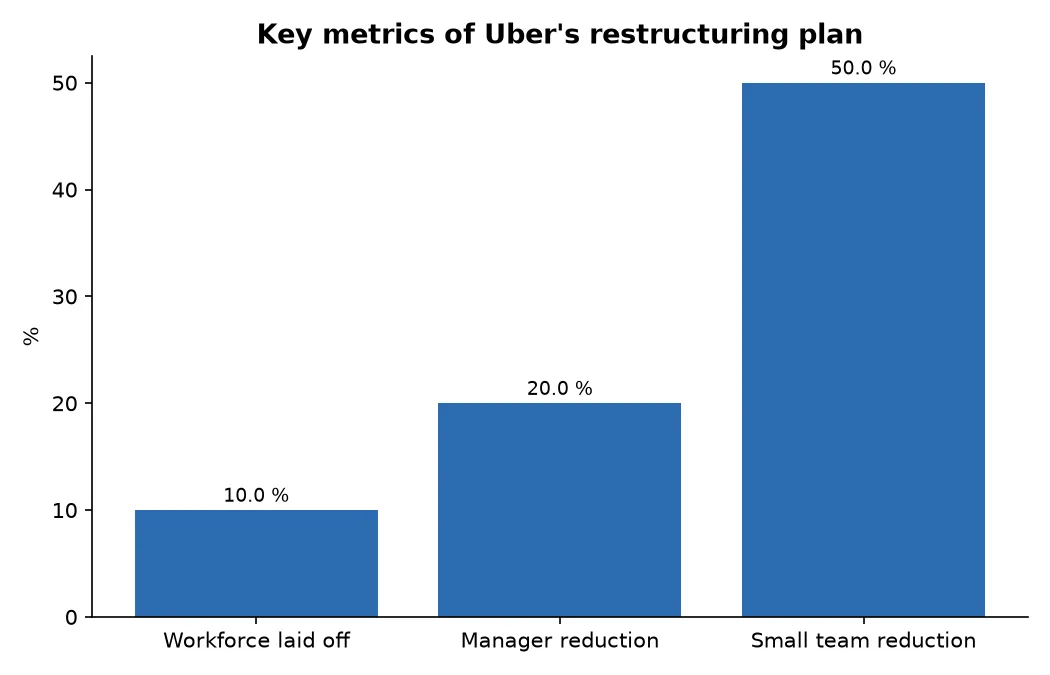
Uber has announced plans to cut roughly 3,300 roles, amounting to about 10% of its global employee base. The decision is part of a broader restructuring effort aimed at dismantling excess management layers and channeling investment into its ridesharing, food delivery, and robotaxi operations.
According to an internal communication from CEO Dara Khosrowshahi, the company intends to reduce its managerial headcount by 20%, with some former managers transitioning into individual contributor roles. The restructuring also targets small teams of one or two people, which will be cut by half, and any employee positioned more than seven reporting levels below the CEO will be let go.
Divisions Consolidated to Reduce Fragmentation
As part of the overhaul, Uber is merging its engineering, scientific, and delivery units into combined divisions. The company is also unifying its delivery operations spanning restaurants, retail, and direct-to-consumer channels under a single structure. The goal is to eliminate the fragmented ownership and redundant coordination that the CEO acknowledged had crept in as the company expanded.
« Growth has brought complexity — more layers, more coordination, more fragmented ownership, » Khosrowshahi reportedly wrote in the internal message. « Some structures made sense when the business was smaller but no longer serve us well at our current scale. »
Remote Work Policy Tightened Significantly
Uber is also ending its remote-work flexibility for the vast majority of employees. Fewer than 1% of staff will be permitted to work remotely going forward, marking a sharp reversal from the more permissive policies many tech companies adopted in recent years. The move aligns Uber with a broader industry trend of pulling workers back into offices as companies restructure for operational efficiency.
What the Restructuring Means for Uber’s Future
The layoffs underscore a pivotal moment for Uber as it balances rapid expansion with the need for leaner operations. By consolidating divisions and flattening its management pyramid, the company is betting that a simpler organizational chart will accelerate decision-making and free up capital for its highest-priority growth areas, particularly autonomous vehicle development. For employees and industry observers alike, the changes mark a clear signal that Uber is prioritizing speed and focus over the sprawling structure it built during its earlier growth phase.