


Understanding IRMAA and the Retiree Fixation
IRMAA — the Income-Related Monthly Adjustment Amount — is a surcharge added to Medicare Part B and Part D premiums for beneficiaries with higher incomes. Because it’s calculated using income data from two years prior, many retirees become laser-focused on staying beneath the next threshold. The fear of a premium increase can dominate retirement tax decisions, sometimes at a real financial cost.
The Problem With Single-Year Thinking
Traditional tax planning aims to reduce liability for the current year. Lifetime tax planning takes a fundamentally different approach, weighing how today’s choices ripple across 20 or 30 years of retirement. Strategies that temporarily boost taxable income — like partial Roth conversions — can ultimately slash total taxes paid over the long run.
Yet some retirees reject these opportunities entirely, worried about triggering higher Medicare premiums. In doing so, they may sacrifice significant savings that only become visible on a long-term timeline.
The Tax Valley Window
After leaving the workforce but before claiming Social Security or starting required minimum distributions, many retirees enter what planners call a « tax valley. » Income is temporarily lower, creating a window to recognize money at favorable rates. This is precisely when Roth conversions can be most powerful.
What the Numbers Reveal
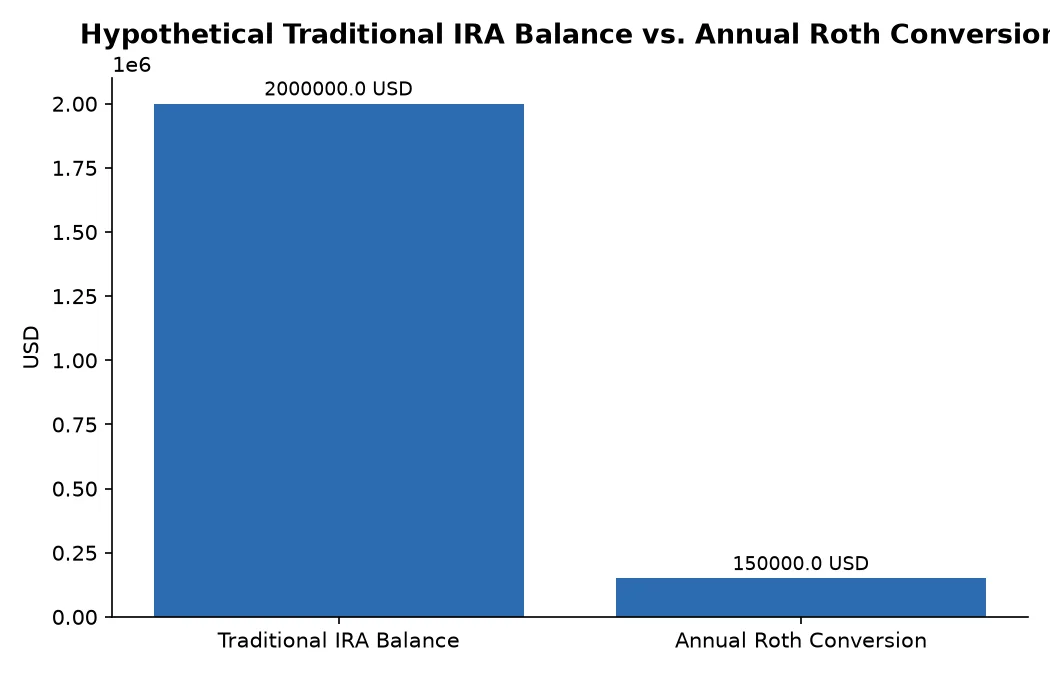
Consider a hypothetical married couple, both 63, sitting on $2 million in traditional IRAs. Recently retired, they currently sit in the 24% federal bracket. Their projections show substantially higher taxable income once Social Security and RMDs kick in.
By converting $150,000 annually to Roth IRAs over several years, they’d push their income high enough to trigger larger Medicare premiums. On paper, that looks undesirable. But those same conversions could meaningfully shrink future RMDs, reduce a surviving spouse’s tax burden, create greater flexibility, and pass more tax-efficient wealth to heirs.
A temporary surcharge measured in the low thousands could pale in comparison to six-figure savings in lifetime taxes.
Let the Math Decide
Retirement planning involves balancing competing priorities: tax efficiency, healthcare costs, Social Security timing, estate goals, and spending sustainability. The mistake is letting any single factor — including IRMAA — dominate the entire strategy.
Think of IRMAA the way investors think about transaction costs: a legitimate expense to weigh, but rarely a reason to walk away from a sound strategy. Retirees who spend years dodging modest surcharges today may actually face larger Medicare costs later, as growing IRA balances produce bigger RMDs that trigger steeper premiums anyway.
Working With a Plan, Not a Rule
Every retiree’s situation is unique. The right approach depends on projected returns, future tax rates, longevity, charitable intentions, state taxes, pension income, and spending needs. Without long-term projections, it’s impossible to know whether avoiding a Roth conversion actually improves your outcome.
The goal of retirement tax planning isn’t minimizing taxes this year or keeping Medicare premiums low today. It’s maximizing after-tax wealth across your entire retirement while preserving flexibility. Sometimes that means staying below an IRMAA line. Other times, the math clearly favors accepting a temporary hit. The answer should come from the analysis — not the acronym.