


A Divergence Between Utility and Market Price
The digital asset market witnessed a notable shift this Tuesday as XRP slipped to $0.98, marking its lowest valuation since late 2024. This price action comes at a paradoxical moment for the ecosystem: while the token’s market performance appears sluggish, the underlying technology is seeing unprecedented institutional integration.
Ripple, the fintech giant behind the XRP Ledger, has successfully expanded its footprint in the Asian financial sector. The company recently announced a landmark agreement with Jeonbuk Bank, a major regional lender in South Korea. This partnership marks the third significant deal for Ripple in the country this year, following previous collaborations with major insurance and banking entities.
Revolutionizing Cross-Border Settlements
The integration of Ripple Payments into Jeonbuk Bank’s infrastructure aims to solve long-standing inefficiencies in international banking. Current traditional methods, often relying on the SWIFT network, frequently require multiple intermediary banks and can take several days to complete a single transaction.
The new system promises several key advantages for business clients, including importers, exporters, and digital content creators:
- Speed: Settlements are completed within seconds to minutes rather than days.
- Availability: The service operates 24/7, eliminating the delays caused by banking business hours.
- Efficiency: Near real-time settlement of stablecoins for cross-border transfers.
The Role of Stablecoins in the Ecosystem
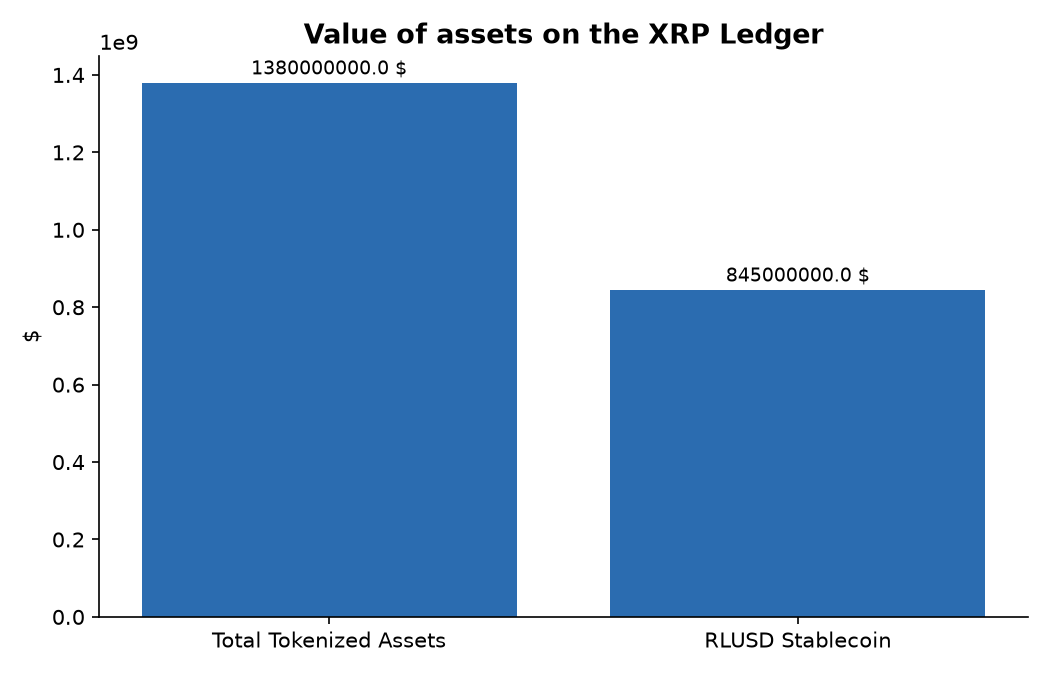
One critical factor explaining the decoupling of Ripple’s business growth from XRP’s price is the rise of stablecoins. Ripple has been heavily promoting RLUSD, its own dollar-pegged token, as the preferred asset for institutional settlement. This shift toward stablecoin-based liquidity means that while the network’s utility is increasing, the demand for the native XRP token does not always scale at the same rate.
Recent data from the XRP Ledger underscores this trend. A significant majority of the value of tokenized real-world assets on the network is currently held in stablecoins, rather than the native token itself.
Market Sentiment: Bulls vs. Bears
Despite the recent price drop, market participants remain divided. On major trading platforms, the ratio of long to short positions suggests that many traders are betting on a recovery. While social media sentiment has hit a three-month low, the futures market shows significant open interest, indicating that large-scale players are still positioning themselves for future volatility.