


A New Choice for Liquidity Providers
For a long time, holders of the weETH token faced a binary choice: accept standard Ethereum staking rewards or take on the additional risks associated with restaking. This lack of differentiation meant that even conservative investors were inadvertently exposed to the complexities of multiple security layers.
Ether.fi, a major player in the staking sector with billions in customer deposits, has decided to change this dynamic. By stripping the restaking component out of the core weETH token, the company has transformed it into a straightforward token that earns traditional Ethereum staking rewards. For those seeking the enhanced yields provided by restaking, a new asset, weETHs, has been introduced.
Understanding the Risk-Reward Tradeoff
To understand why this move matters, it is essential to distinguish between the two mechanisms:
- Staking: Locking up Ether to support the Ethereum network in exchange for standard rewards.
- Restaking: Using that same locked Ether to secure additional services, aiming for higher returns but introducing new layers of potential failure.
The primary drawback of restaking is the increased risk of « slashing » or penalties. If either the primary staking layer or the additional services fail, the user’s deposit can be penalized. By splitting these products, Ether.fi allows users to choose their level of risk: standard exposure via weETH or high-yield, high-risk exposure via weETHs.
The Macro Debate: Ethereum’s Staking Economics
This product restructuring arrives at a sensitive time for the Ethereum network. Researchers within the ecosystem are currently debating how staking rewards should be distributed as the network matures.
A recent proposal suggests that once a certain threshold of Ether is locked in staking—specifically when half of all Ether is committed—the network should stop paying staking rewards entirely. Proponents argue this would prevent the concentration of Ether among a few large custodians. However, critics warn that such a move could undermine the incentive for smaller participants and disrupt the entire ecosystem of products built around staking yields.
Ether.fi’s Financial Performance
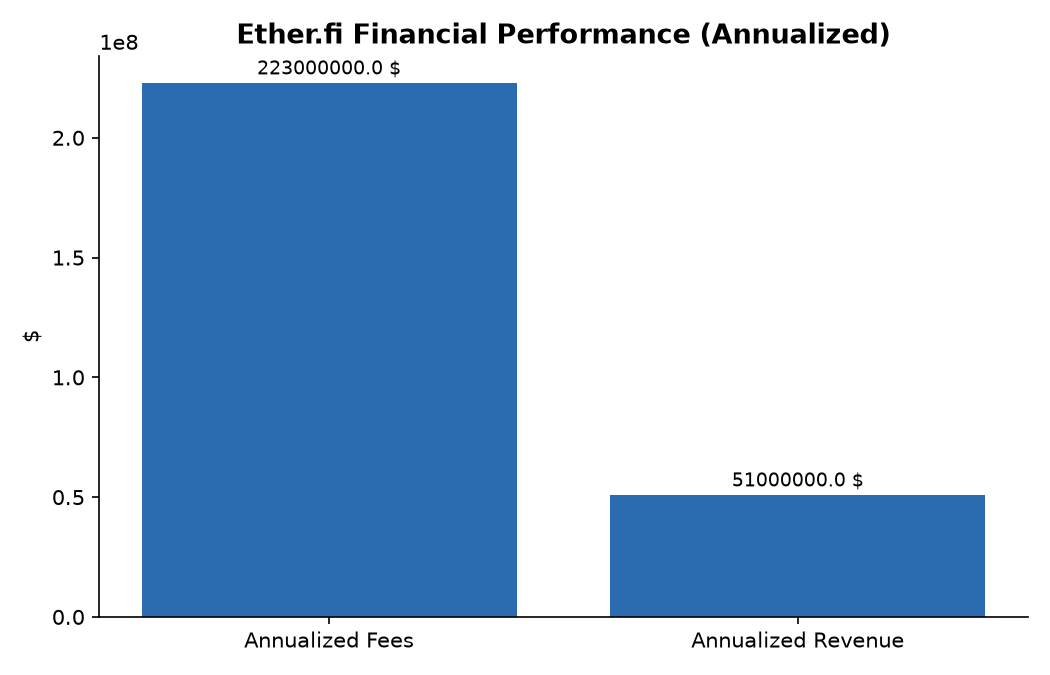
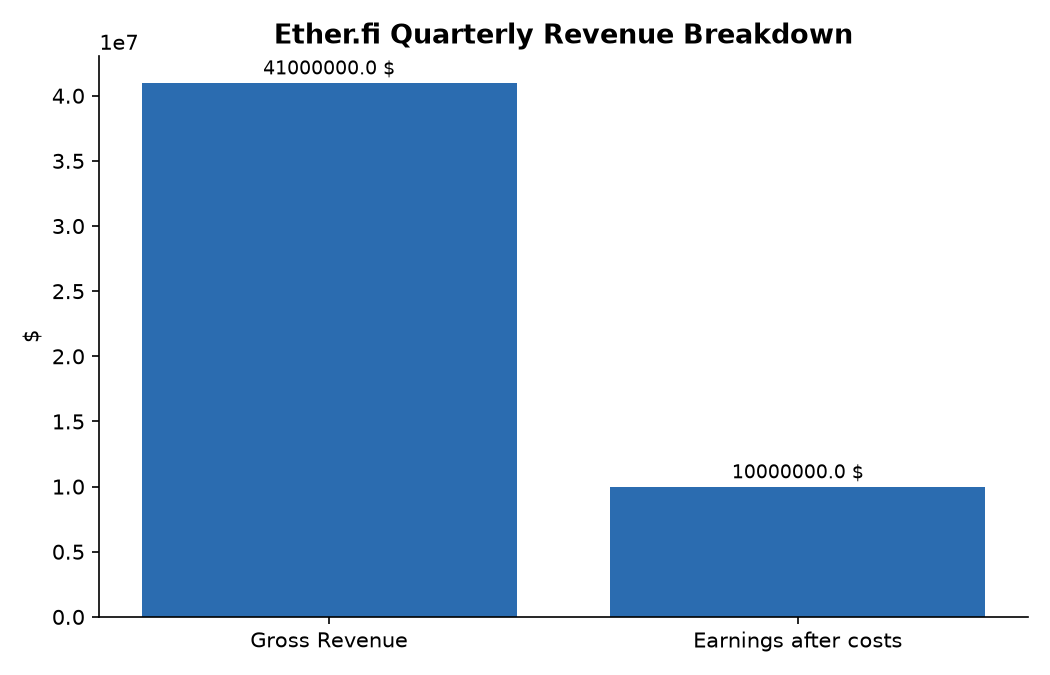
As the landscape evolves, Ether.fi continues to demonstrate significant scale. The platform manages a massive volume of assets and has reported substantial annualized revenue and fees. Despite the complexity of the market, the company’s financial metrics reflect its dominant position in the liquid staking market.