


The Trap of Yield Chasing
When looking for passive income, it is tempting to gravitate toward the highest yield available. On the surface, a stock offering a 6% or 7% dividend looks far more attractive than one offering 2.5%. However, high yields are often a red flag, signaling that the market expects a dividend cut or that the company’s stock price has plummeted due to fundamental weaknesses.
Investors often compare stock yields to the ‘risk-free’ rates offered by government treasuries or high-yield savings accounts. If a bank offers 4% with virtually no volatility, a stock yielding only 2.7% might seem inadequate. But this comparison misses two critical components of wealth building: capital appreciation and tax efficiency.
The Case for the ‘Sweet Spot’ Strategy
A more effective approach involves targeting a specific threshold—often around 2.5%—to ensure you aren’t buying into ‘value traps.’ By setting a minimum yield hurdle, you can filter out struggling companies while still capturing high-quality assets in sectors like energy, banking, and defense.
Why is this threshold effective? It allows for a diversified portfolio that includes:
- Energy Giants: Companies with massive cash flows that support both dividends and growth.
- Financial Institutions: Large banks that offer stability and consistent payouts.
- Defense Contractors: Reliable players with long-term government contracts.
This strategy aims for a total return goal (for example, 10% annually) where a portion of that return comes from cash distributions, and the rest comes from the rising value of the underlying shares.
Growth vs. Income: A Balanced Approach
Traditional dividend growth investing often focuses on ‘dividend aristocrats’—massive companies that have raised payouts for decades. While safe, these stocks often have very low yields. A more dynamic variation is to identify companies that are currently yielding at least 2.5% but also possess the characteristics of a high-growth business.
By combining a yield floor with a focus on dividend growth rates, investors can build a portfolio that provides immediate income while also providing a hedge against inflation through increasing annual distributions.
Evaluating Dividend-Focused Funds
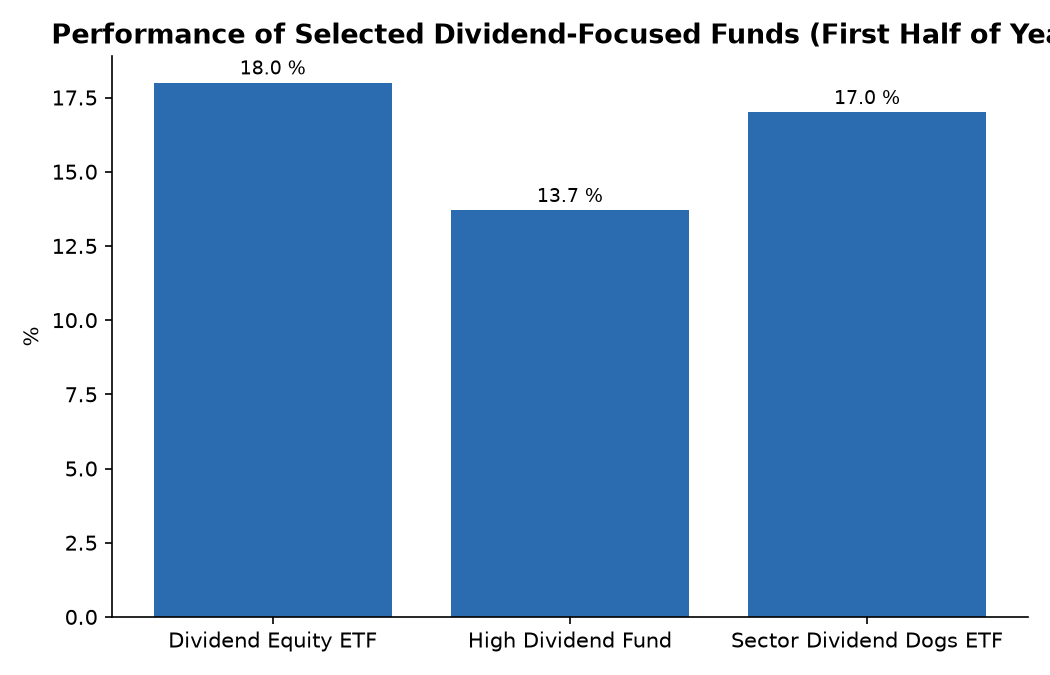
For those who prefer a hands-off approach, several exchange-traded funds (ETFs) utilize rule-based screening to capture this balance. Some funds focus on high-dividend sectors with lower volatility, while others take a more aggressive stance by including high-growth technology names that pay dividends. When choosing a fund, it is vital to look beyond the headline yield and examine the underlying methodology to ensure it aligns with your risk tolerance and total return objectives.