

A Cloud-First Approach to AI Computing
Jio’s cloud PC service shifts the heavy lifting away from the physical machine and into remote data centers. Users can access the processing power and storage needed for modern AI applications directly through the cloud, regardless of how old their current device may be. The company claims even computers up to eight years old can handle contemporary AI workloads through this model, eliminating the need for costly replacements or component upgrades.
Subscription Pricing and Accessibility
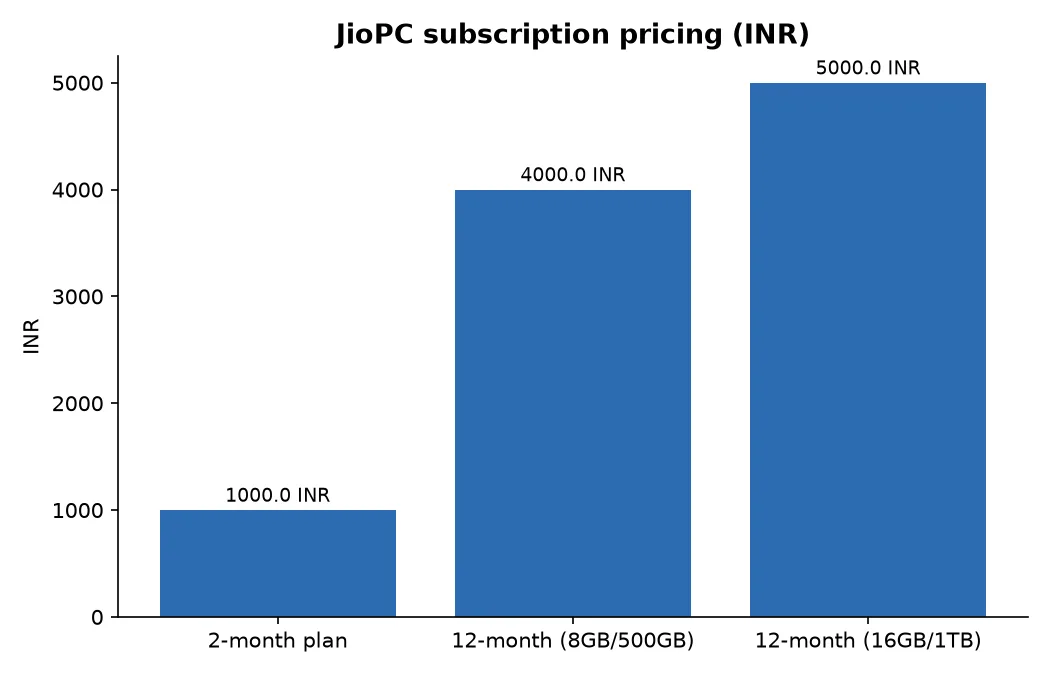
The service is positioned as an affordable entry point into AI-capable computing. A two-month plan starts at 1,000 rupees (approximately $11), while annual subscriptions are priced at 4,000 rupees (around $42) for 8GB of RAM and 500GB of storage, or 5,000 rupees (roughly $53) for the 16GB and 1TB tier. These price points place the service well within reach of budget-conscious consumers and small businesses across the subcontinent.
The Scale of India’s PC Market
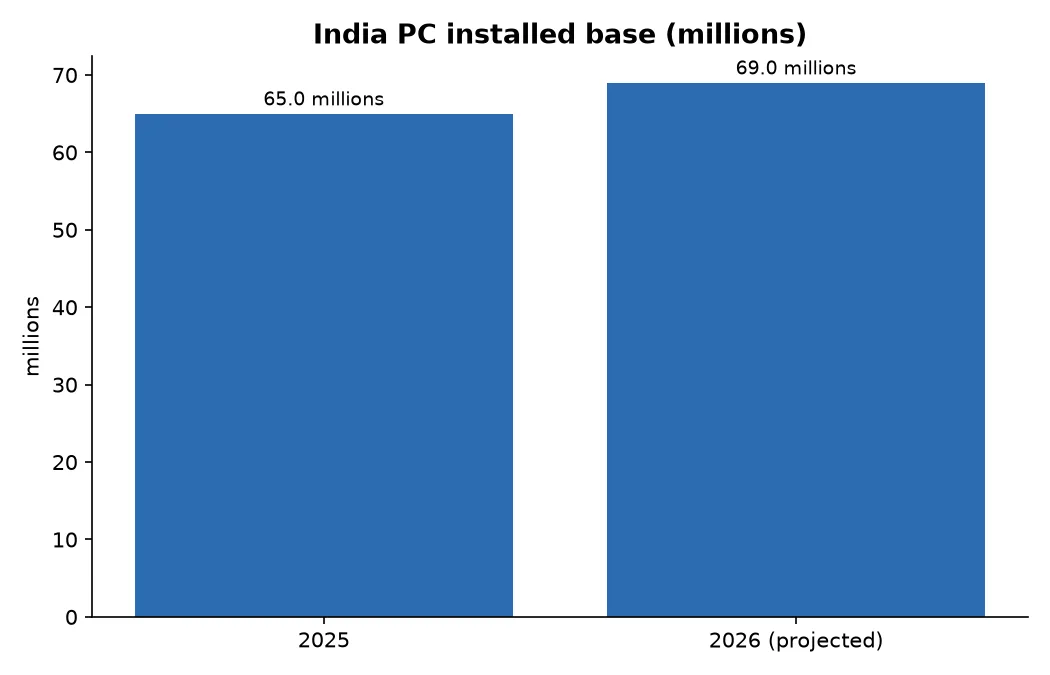
India‘s personal computer landscape is vast and still growing. Industry estimates indicate more than 65 million PCs were in active use across the country in 2025, split between roughly 34 million consumer devices and 31 million commercial machines. That installed base is projected to climb toward 69 million units by the close of 2026, underscoring the sheer scale of the market Jio is targeting.
Lengthening Replacement Cycles
Consumers and small businesses in India have traditionally swapped their PCs every five to six years, a stretch from the four-to-five-year cycle observed in 2022. Enterprises are following a similar pattern, with replacement timelines extending to roughly four years, up from three previously. These widening gaps create a growing population of machines that remain functional but lack the horsepower for modern demands — a gap Jio’s cloud model is designed to fill.
Industry Perspectives
Industry observers see JioPC as a potential paradigm shift in how computing is consumed. By moving processing and storage into the cloud, the company can continuously expand capacity without pushing users toward new hardware purchases. One market analyst described the service as broadening Jio’s value proposition while directly challenging the traditional upgrade cycle. However, the same expert stopped short of predicting that cloud PCs would supplant conventional machines, suggesting instead that the service could carve out a parallel, price-sensitive tier for households, students, and others who had never considered purchasing a new AI-capable PC.
Challenges Ahead
Despite the promise, significant hurdles remain. Indian consumers have long favored owning their hardware outright over paying recurring subscription fees. Jio must persuade users that a monthly or annual payment justifies surrendering some advantages of a traditional PC, including offline functionality. This concern is especially acute in smaller cities and towns, where affordable computing holds the greatest growth potential but internet reliability can be inconsistent. JioPC’s dependence on a stable connection means any disruption directly impacts the user experience.
Competition also looms at the low end. Refurbished PCs offer consumers the ability to own inexpensive hardware without remaining tethered to connectivity — a compelling alternative for price-sensitive buyers. Furthermore, Jio’s characterization of its offering as « AI-ready » raises questions. The company has been tight-lipped about the underlying infrastructure powering its cloud service, and its published specifications do not reference dedicated AI accelerators for on-device generative AI workloads, a hallmark of the latest generation of AI PCs.
The Bigger Question
Ultimately, the success of JioPC hinges on a fundamental shift in consumer behavior. The real test is whether people come to view cloud computing as an everyday utility rather than a temporary workaround — and whether they are willing to pay for processing power instead of investing in new hardware. If Jio can crack that code, it could redefine the relationship between Indians and their computers.