


The Hidden Tax Trap in Retirement Savings
For decades, the standard advice focused on accumulating wealth in tax-advantaged accounts like 401(k)s and traditional IRAs. While this strategy works beautifully during the saving years, it often sets the stage for a tax shock in retirement. The culprit is a concept known as the Social Security tax torpedo, which arises when your retirement income pushes a significant portion of your benefits into taxable territory.
Understanding Provisional Income
Tax authorities calculate how much of your Social Security is taxable based on a figure called provisional income. This includes your regular taxable income, plus any tax-free interest, plus half of your Social Security benefit. Once this total crosses specific thresholds, your benefits become taxable—up to 85% in the highest bracket.
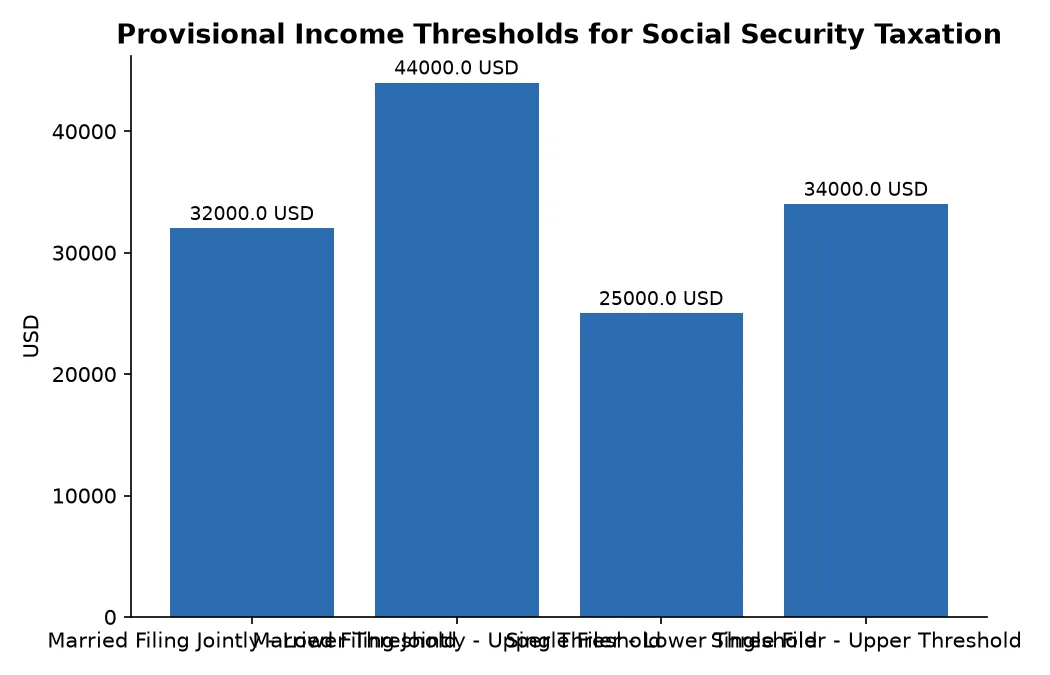
These thresholds have remained frozen since the 1980s and 1990s, meaning they haven’t kept pace with inflation or general wage growth. For married couples filing jointly, the lower threshold is $32,000, and the upper threshold is $44,000. For single filers, the thresholds are $25,000 and $34,000, respectively. In today’s economy, even modest retirement incomes can easily surpass these outdated limits, triggering the maximum tax rate on benefits.
Why Default Planning Falls Short
The problem intensifies when almost all your savings reside in tax-deferred accounts. Every dollar you withdraw to cover living expenses is fully taxable, and when combined with half of your Social Security benefit, it can rapidly propel your provisional income past the thresholds. This often happens in the very first year of retirement, leaving little room for tax planning.
Many retirees don’t realize that they’ve inadvertently created a situation where they’re paying the highest possible tax on their Social Security—not because of poor choices, but because they never diversified their account types. The key is to think of your savings in three buckets: taxable, tax-deferred, and tax-free. Relying too heavily on the middle bucket limits your flexibility.
The Power of Tax-Free Income
A Roth IRA stands out as the primary tool for building a tax-free bucket in retirement. Withdrawals from a Roth don’t count toward provisional income, aren’t reported on your tax return, and don’t increase Medicare premiums. This makes it a valuable resource for managing overall tax liability.
The most effective way to establish this bucket is through a Roth conversion, which involves moving money from a traditional IRA to a Roth IRA and paying income tax on the converted amount in that year. After conversion, all future growth and withdrawals are completely tax-free. The optimal window for conversions is typically the few years before or after retirement, when your income is at its lowest and tax rates are more favorable.
A Practical Example
Consider a typical couple retiring with $1.8 million primarily in traditional IRAs, plus a small brokerage account. If they claim Social Security early and withdraw from their IRAs to meet annual expenses, their provisional income could easily exceed the upper threshold, resulting in 85% of their benefits being taxed. By contrast, if they begin converting portions of their IRA to Roth years earlier—while still working and paying taxes from current income—they can significantly reduce their provisional income in retirement. This strategy allows a portion of their spending to come from tax-free sources, lowering the overall tax bill without altering their lifestyle.
Act Before the Window Closes
Waiting is the biggest mistake, as required minimum distributions (RMDs) force taxable income onto your return starting at age 73 or 75, regardless of your needs. By planning ahead, you can maintain more control over your tax situation. Start by calculating your own provisional income, identifying available tax brackets, and gradually shifting assets into tax-free accounts. Even small steps taken early can yield substantial savings over time.
Key Takeaways
- Outdated tax thresholds mean even modest retirement incomes can trigger maximum Social Security taxation.
- Tax diversification across taxable, tax-deferred, and tax-free accounts provides flexibility to minimize your tax bill.
- Early Roth conversions, done during lower-income years, are a reliable strategy to build a tax-free retirement foundation.
- Procrastination reduces options, so begin planning well before retirement to maximize benefits.
Ultimately, avoiding the maximum tax on Social Security isn’t about luck—it’s about proactive planning. By understanding the mechanics of provisional income and leveraging tax-free accounts, you can preserve more of your hard-earned savings throughout retirement.