


Navigating the ‘Wall of Worry »
The current market environment is defined by a paradox. Even as investors face concerns regarding rising tariffs, persistent inflation, and global instability, major equity indexes continue to demonstrate resilience. While a high market price might deter those waiting for a significant dip, a deeper look at valuation metrics suggests that opportunities for value-driven investors remain abundant.
When evaluating whether a stock is truly a bargain, looking at the Price-to-Earnings (P/E) ratio alone can be misleading. A more sophisticated approach involves the Price/Earnings-to-Growth (PEG) ratio. A PEG ratio below 1.0 typically indicates that a stock is undervalued relative to its expected earnings growth, making it a key metric for identifying ‘growth at a reasonable price’ (GARP) opportunities.
Key Sectors and Stock Picks
To build a balanced portfolio, it is essential to diversify across different industries. Below are five stocks that meet strict criteria: high analyst consensus, low PEG ratios, and competitive forward P/E multiples compared to their respective sectors.
1. Financial Services: Charles Schwab (SCHW)
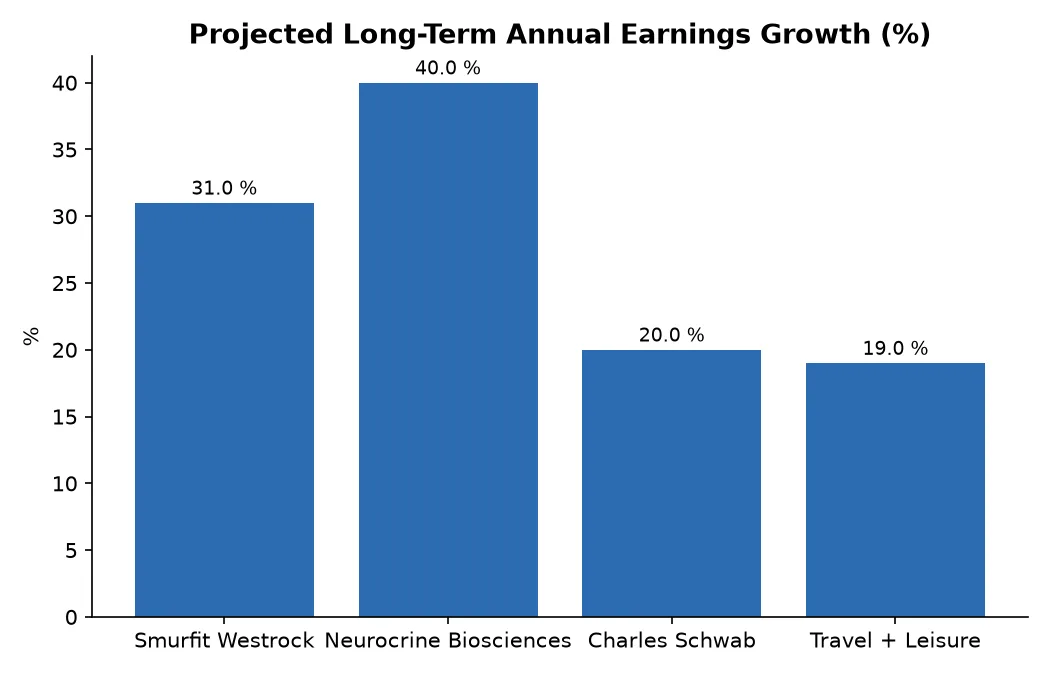
As wealth management becomes increasingly digitized, Charles Schwab is positioning itself to capture a massive portion of the advisory market. While some fears regarding AI-driven competition have caused temporary volatility, the company’s massive scale provides a significant competitive moat. With analysts projecting robust annual earnings growth, the current valuation appears to overlook its long-term potential in the retail advisory space.
2. Consumer Discretionary: Travel + Leisure (TNL)
The travel sector is proving to be a powerhouse for cash flow. Travel + Leisure stands out not just for its diversified vacation ownership and membership models, but for its commitment to returning capital to shareholders through dividends and buybacks. For investors looking for a combination of stability and growth, this company offers a highly efficient business model with significant free cash flow yields.
3. Industrials: United Airlines Holdings (UAL)
Despite the volatility of fuel prices and global logistics, the aviation industry is seeing a resurgence. United Airlines is currently undergoing a major fleet modernization strategy aimed at increasing fuel efficiency and improving passenger experience. This long-term investment is expected to drive significant bottom-line growth, making its current low P/E ratio highly attractive to long-term investors.
4. Materials: Smurfit Westrock (SW)
The boom in e-commerce has created a structural demand for high-quality packaging solutions. Smurfit Westrock is a primary beneficiary of this trend. The company has demonstrated significant pricing power, allowing it to maintain margins even in shifting economic conditions. With analysts forecasting high double-digit growth, this stock represents a classic growth play at a reasonable price.
5. Healthcare: Neurocrine Biosciences (NBIX)
In the high-stakes world of biopharmaceuticals, Neurocrine Biosciences is carving out a niche in neurological and psychiatric treatments. While the sector always carries inherent regulatory risks, the company’s diversifying revenue streams—moving beyond its primary flagship product—suggests a more robust financial future. Current market pricing seems to undervalue the company’s projected long-term earnings trajectory.
Investment Summary Table
For those looking to compare these opportunities, the following data highlights the growth potential identified by market analysts: