


The Political Trap in Portfolio Management
When election cycles dominate the news cycle, even seasoned investors can feel the urge to pivot their strategies. The influx of new polls, heated debates, and shifting predictions regarding legislative control can create a sense of urgency to move capital into seemingly ‘safer’ or ‘more political’ sectors.
However, history suggests that trying to time the market based on political outcomes is often a losing game. While policy changes can influence specific industries, the primary drivers of market performance remain corporate earnings, interest rates, inflation, and overall economic valuations. For most individual investors, politics should remain a topic for social gatherings rather than a primary driver of asset allocation.
Historical Context: Volatility vs. Opportunity
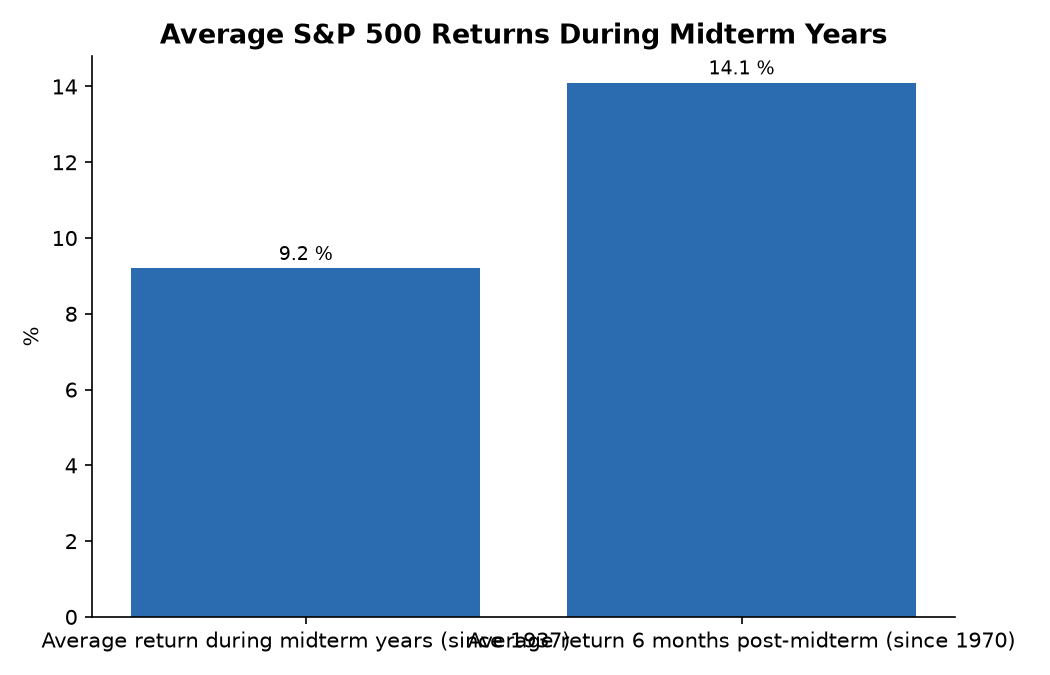
It is true that midterm years often bring increased market fluctuations. Yet, looking at historical data reveals a pattern of resilience. While uncertainty can cause temporary dips, these periods have frequently been followed by significant market recoveries.
In fact, data from recent decades shows that the six months following midterm elections have often seen strong positive returns for major indices. Instead of viewing election-related volatility as a threat, disciplined investors often view it as a period to audit their existing positions.
Five Strategies to Protect Your Financial Future
1. Rely on Your Established Financial Plan
A robust financial plan acts as your compass during a storm. Rather than reacting to the latest headline, ask yourself if your long-term objectives, time horizon, and risk tolerance have actually changed. If your life goals remain the same, your investment strategy should likely remain consistent as well.
2. Rebalance Rather Than React
Market swings can cause your portfolio to drift away from its intended target weights. If certain assets have surged, you may become overweight in one sector; if others have dropped, you may be underweight. Rebalancing—selling a portion of winners to buy undervalued assets—is a disciplined way to manage risk without making emotional ‘bets’ on election winners.
3. Prioritize True Diversification
Diversification is the most effective tool for mitigating election-related uncertainty. This means looking beyond just different stocks to include various asset classes, such as fixed income, and different geographic regions. Be wary of ‘illusionary diversification,’ where multiple ETFs or mutual funds actually hold the same underlying heavy-weight stocks, leaving you more concentrated than you realize.
4. Focus on Fundamentals, Not Headlines
Corporate performance is driven by earnings and productivity, not by who wins a seat in Congress. While regulatory shifts can impact specific sectors, the broad market tends to follow economic fundamentals. Avoid the temptation to ‘time the bottom’ or exit the market entirely based on polling data.
5. Prepare Your Mental Strategy
Investing is as much a psychological challenge as it is a mathematical one. Before volatility arrives, decide on your ‘trigger and response.’ For example, you might decide to continue dollar-cost averaging regardless of news, or set a specific threshold for rebalancing. Having a predetermined response prevents panic-selling when the ‘fear index’ inevitably spikes.
Conclusion: The Long Game Wins
The goal of investing is not to ‘win’ the election trade, but to achieve your personal financial milestones. By staying focused on diversification, rebalancing, and long-term fundamentals, you can navigate the turbulence of election seasons with your wealth intact.