


The Paradox of AI Growth
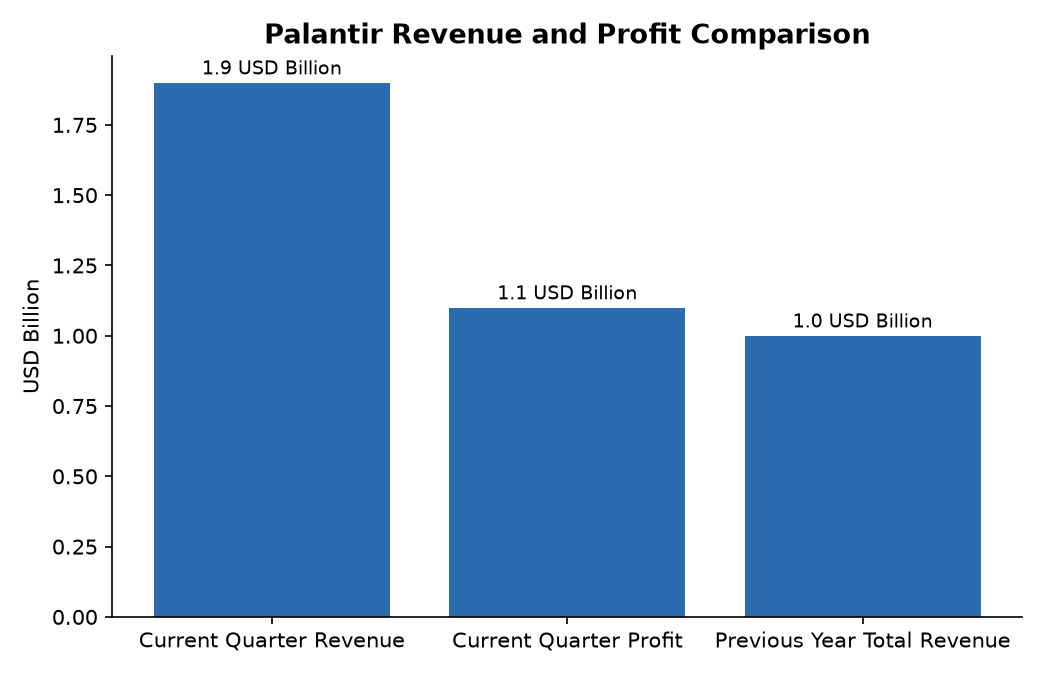
Palantir has recently achieved a financial milestone that highlights the massive demand for advanced data analytics. During its second quarter, the company reported a staggering revenue of $1.9 billion, marking a 93% increase compared to the same period last year. Even more striking was the profit margin, with the company generating $1.1 billion in a single quarter—a figure that surpasses its total revenue from the previous year.
However, despite this commercial success, the company’s leadership is raising alarms about the long-term implications of the current artificial intelligence boom. The central concern is not a lack of demand, but rather the predatory nature of certain AI model developers.
The Risk of Intellectual Property Migration
In a recent communication to shareholders, Palantir’s CEO expressed deep skepticism regarding the business models of major AI research labs. He suggested that many developers of large language models are positioned to capture the ‘eans of production’ from their very partners.
The core of the argument rests on the concept of data sovereignty. As enterprises integrate external AI tools into their workflows, they often inadvertently feed their proprietary information, expertise, and unique business processes into these models. This creates a cycle where:
- Companies pay high costs for AI services.
- Their unique intellectual property is used to train models.
- Those models eventually become competitors capable of operating without the original enterprise.
This phenomenon, described by leadership as a form of ‘colonization’ of the enterprise, poses a strategic threat to businesses that seek to maintain control over their digital assets and operational knowledge.
A Shift Toward Model-Agnostic Solutions
To counter these risks, Palantir is positioning itself as a provider of model-agnostic software. Unlike labs that focus solely on building foundational models, Palantir offers tools that allow organizations to maintain strict control over their data, their prompts, and their orchestration layers.
By providing a layer of governance between the enterprise and the AI model, Palantir aims to prevent the ‘igration’ of corporate expertise. This approach ensures that companies can benefit from cutting-edge AI without sacrificing the very knowledge that gives them a competitive edge in the market.
As the AI sector continues to evolve at breakneck speed, the tension between rapid innovation and the protection of corporate intellectual property is expected to become a defining battleground for the next decade of digital transformation.