

The Great Pivot: Beyond the Assembly Line
For years, Tesla has been defined by its ability to manufacture and deliver high-performance electric vehicles. However, a deep dive into recent corporate communications suggests that the company is aggressively rebranding itself. While vehicle sales still account for a significant portion of total revenue—roughly 70% in recent quarters—the narrative driving the company’s future is no longer centered on cars.
The focus has shifted toward a high-stakes bet on autonomous systems and humanoid robotics. This transition isn’t just a marketing tactic; it represents a fundamental change in how the company’s leadership views its long-term valuation and technological mission.
The Musk Factor: AI as a Central Pillar
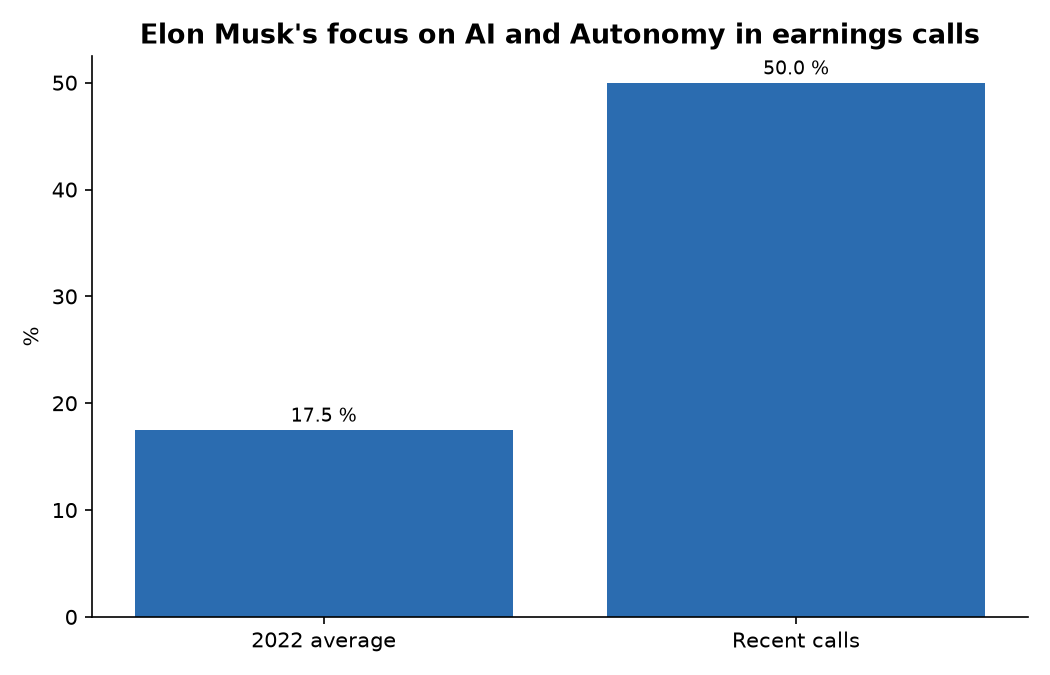
A longitudinal analysis of earnings call transcripts reveals a dramatic surge in discussions regarding advanced technology. Elon Musk’s rhetoric has moved decisively away from traditional manufacturing toward the digital frontier. In recent sessions, nearly half of the time spent speaking by the CEO is dedicated to topics such as artificial intelligence, robotaxis, and Full Self-Driving (FSD) software.
This is a stark contrast to previous years. For instance, in 2022, these futuristic technologies accounted for only a fraction of the conversation. Musk has been vocal about this shift, suggesting that viewing the company solely as an automaker is a fundamental misunderstanding of its potential value.
The Rise of Optimus
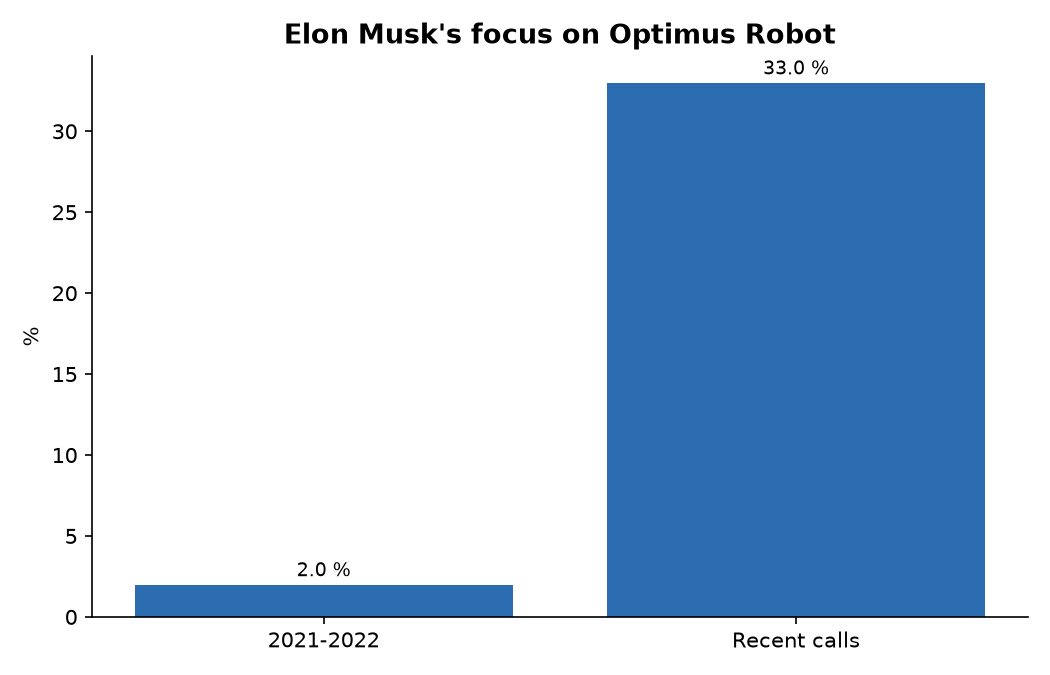
Perhaps the most significant shift in recent months is the sudden prominence of the Optimus humanoid robot project. While the project was introduced several years ago, it has only recently moved to the forefront of the company’s public discourse. In recent quarterly updates, discussions regarding robotics have claimed nearly a third of the CEO’s speaking time, signaling that the humanoid robot is no longer a side project, but a cornerstone of the company’s vision.
Executive Divergence: Vision vs. Reality
Interestingly, there is a noticeable gap between the CEO’s enthusiasm and the focus of other top executives. While Musk is heavily invested in the AI narrative, other key leaders—including the Chief Financial Officer and the Vice President of Engineering—remain more grounded in the automotive side of the business.
These executives continue to spend a significant portion of their time discussing manufacturing and core vehicle operations. This divergence likely reflects the practical reality that while AI and robotics represent the future, the automotive segment remains the primary engine of current cash flow and operational complexity.
Navigating a Changing Market
This strategic pivot comes at a critical time for the automotive sector. As competition intensifies from both established legacy manufacturers and emerging players in China, the margins on traditional vehicle sales are facing increased pressure. By pivoting toward AI and autonomy, Tesla is attempting to decouple its valuation from the cyclical and competitive nature of the car industry, aiming instead for the high-growth potential of the robotics revolution.