

Shifting Fiscal Requirements in the Third Quarter
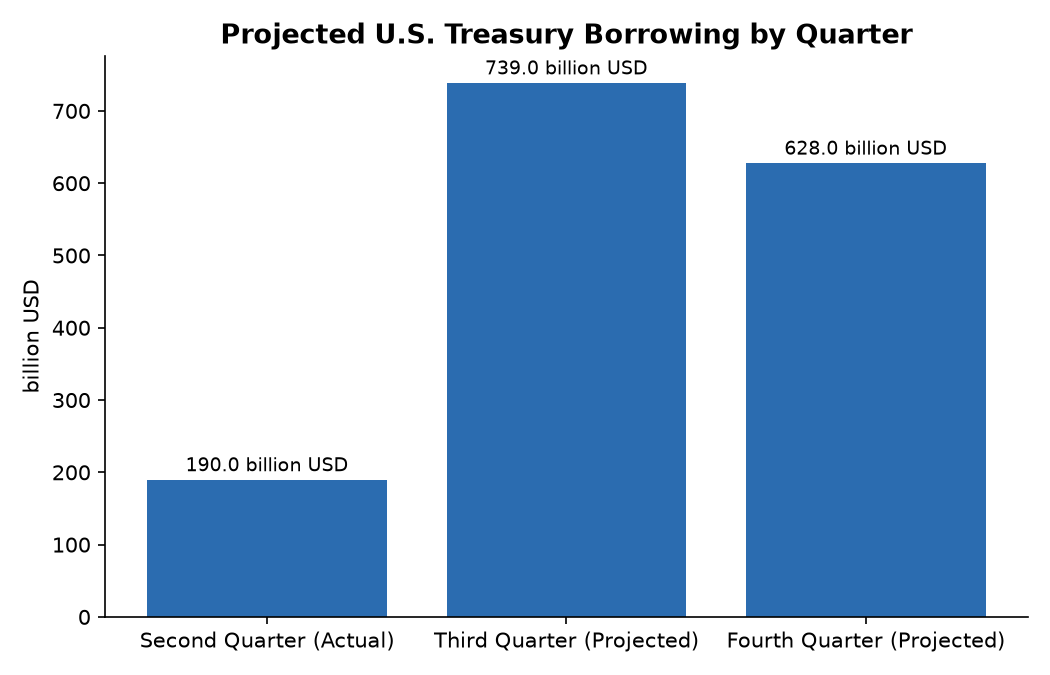
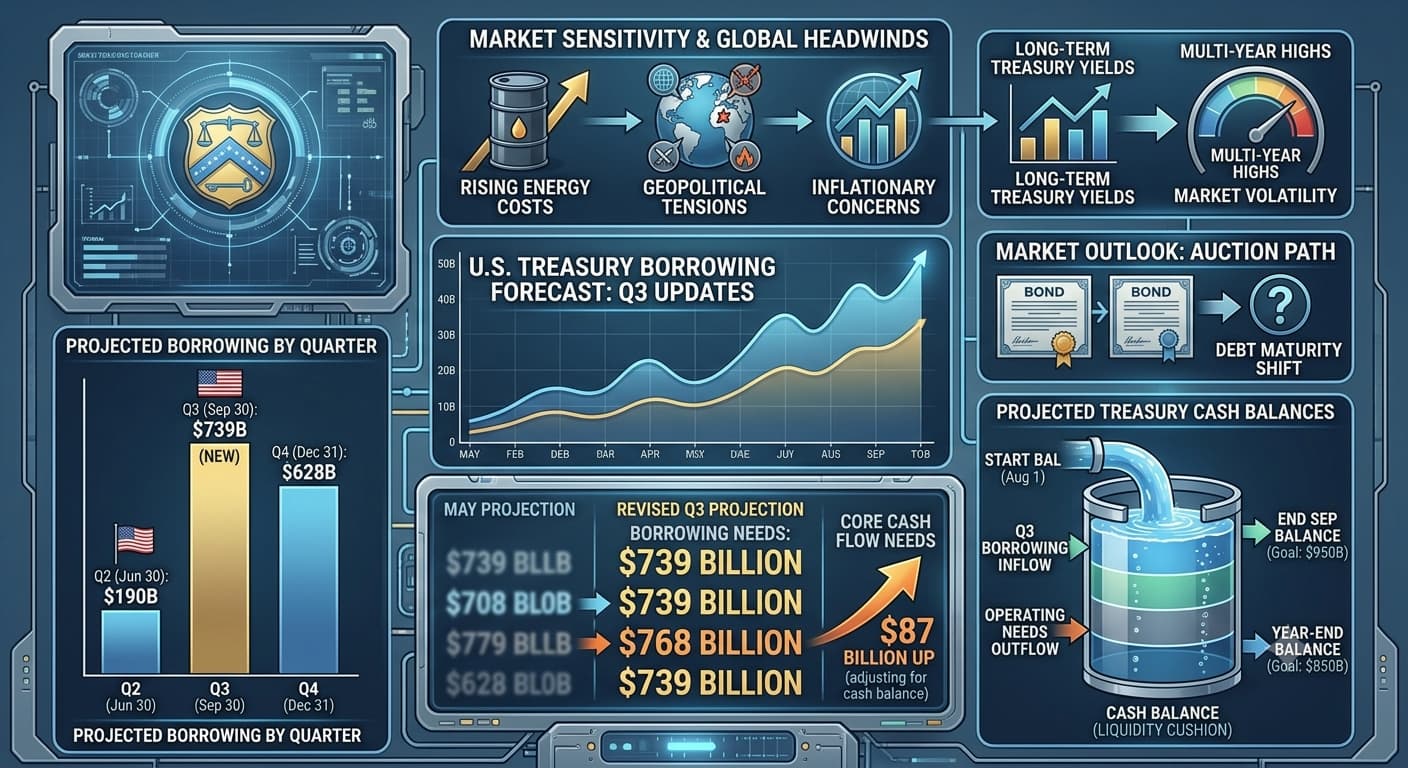
In a recent update to its quarterly refunding projections, the U.S. Treasury revealed a significant uptick in its anticipated borrowing needs. The department now expects to borrow $739 billion during the third quarter of the year. This figure represents a $68 billion increase compared to the projections released back in May.
When analyzing the underlying drivers of this increase, the situation becomes more complex. By removing the impact of a higher-than-expected starting cash balance, the actual rise in borrowing requirements stands at $87 billion above the previous May estimate. This suggests that the government’s fundamental cash flow needs are growing faster than initially anticipated.
Projected Cash Balances and Future Outlook
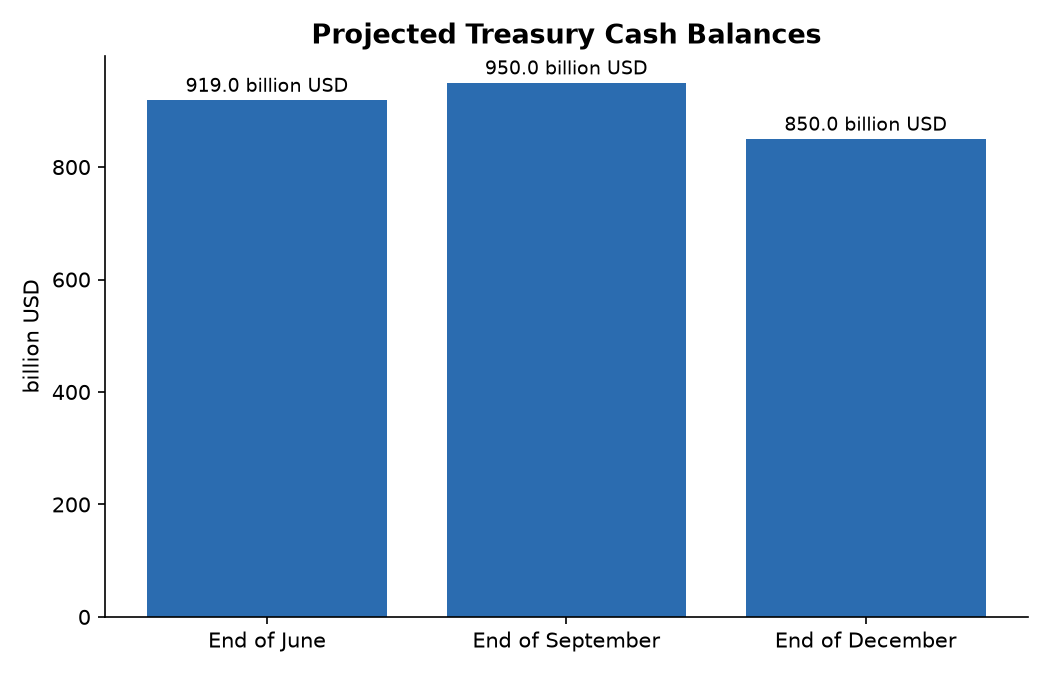
The Treasury’s strategy involves maintaining specific liquidity cushions to ensure smooth operations. For the end of September, the current projections assume a cash balance of $950 billion. Looking further ahead into the fourth quarter, the department anticipates borrowing $628 billion, aiming for a year-end cash reserve of $850 billion.
To understand the recent trajectory, it is helpful to look at the second quarter performance. The department reported borrowing $190 billion in the quarter ending in June, leaving a cash balance of $919 billion. While this was slightly higher than the May forecast, it was actually lower than expected once the higher-than-anticipated cash cushion was factored out.
Market Sensitivity and Global Headwinds
The timing of these updates is critical for financial markets. Investors are currently navigating a period of heightened uncertainty, driven by rising energy costs and geopolitical tensions in the Middle East. These factors have contributed to inflationary concerns and pushed long-term Treasury yields to levels not seen in several years.
As the Treasury prepares to release detailed auction plans, market participants are looking for specific signals regarding debt maturity. There is significant interest in whether the department will shift toward longer-dated debt to manage its obligations. Given the current market volatility, many experts suggest that a predictable issuance path is essential to avoid further destabilizing the bond market.