

Revenue Surge Places Robinhood Chain Among Top Networks
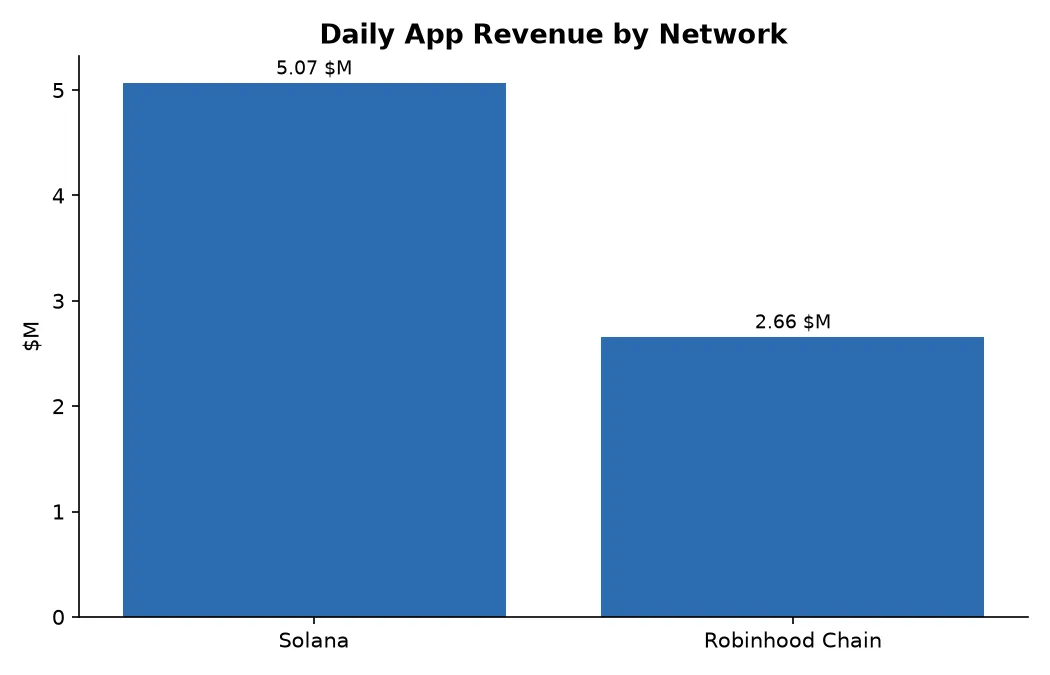
Robinhood Chain has posted its strongest day yet, with applications on the network generating approximately $2.66 million in revenue over a 24-hour period. That figure places it second only to Solana, which led with $5.07 million, and roughly double what Ethereum-based apps earned during the same window. The network also outpaced Base by a significant margin.
Importantly, app revenue reflects earnings generated by the applications themselves from user activity — not direct revenue collected by Robinhood. The company operates the underlying infrastructure that processes transactions and collects fees from users, but has not disclosed the precise amount it retains. Executives noted during a July earnings call that the chain earns « a few basis points on transactions. »
Memecoins Drive the Bulk of Activity
The surge is overwhelmingly fueled by speculative token trading rather than the tokenized stocks the chain was designed to host. A token launchpad called Pons saw roughly 22,600 new tokens created in a single day — a more than 40% increase from the previous day. Most of these are short-lived speculative coins built around internet trends, jokes, or viral moments rather than representations of traditional financial assets.
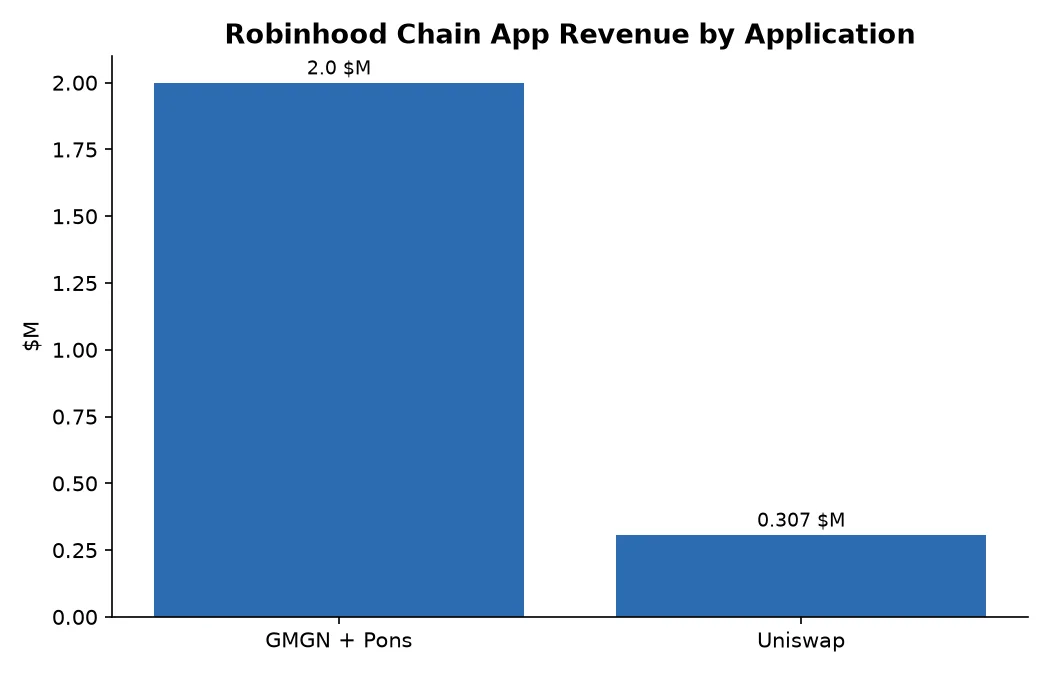
Together, GMGN (a memecoin trading application) and Pons accounted for approximately $2 million of the chain’s $2.66 million in total app revenue. Uniswap, a decentralized exchange, contributed an additional roughly $307,000.
Transaction Volumes Hit Record Highs
The blockchain processed 5.52 million transactions on August 30, marking an all-time high. Decentralized exchange trading volume on the network reached approximately $875 million on the same day. These numbers represent a dramatic escalation from early July, when daily transaction counts sat well below one million.
The speculative momentum has mirrored the broader crypto market rally. Cash Cat, one of the network’s most prominent memecoins, more than doubled in value during the week leading up to August 25 as traders increasingly gravitated toward smaller, riskier tokens.
A Detour From the Original Vision
Robinhood Chain launched on July 1 with tokenized stocks as its flagship use case, enabling traditional assets to be represented and traded on a blockchain. Within just two weeks, memecoins had already captured the majority of trading activity. Robinhood-themed tokens proliferated, while tokenized stocks remained a small fraction of the network’s usage.
CEO Vlad Tenev appeared unfazed by this turn when the first memecoin wave arrived in July, acknowledging that while the network was built for real-world assets, « it works great for memes too. » The situation presents an unusual form of success: the chain is thriving, but not quite in the way its creators envisioned.
The question now is whether this memecoin-driven momentum represents a sustainable growth phase or a temporary burst that will fade as market sentiment shifts. For Robinhood, the chain’s early traction — regardless of its source — demonstrates genuine user demand for on-chain infrastructure, even if the use case diverges from the original blueprint.