

Oil shock and hawkish signals rattle Wall Street
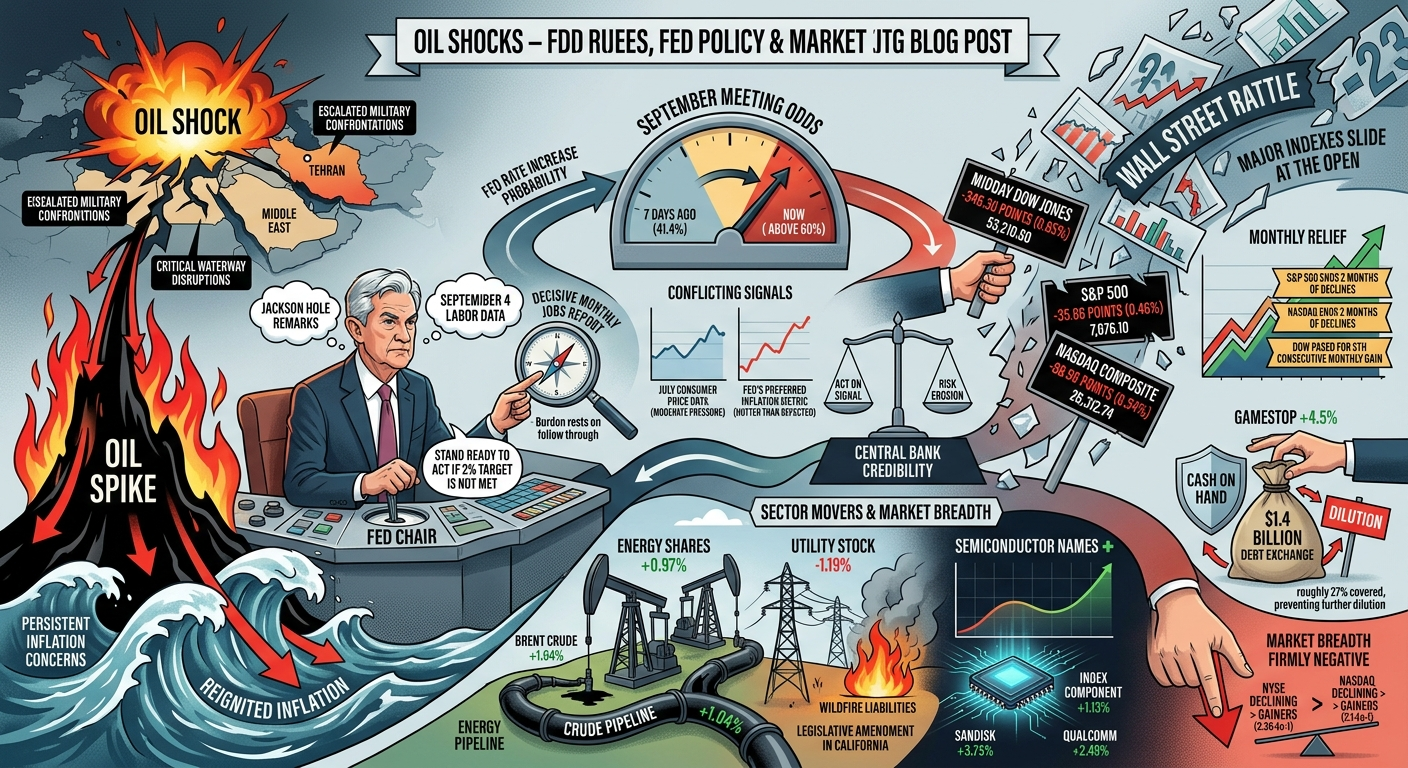
Oil prices climbed sharply after military confrontations between Washington and Tehran escalated, disrupting shipments through a critical Middle Eastern waterway. The spike reignited concerns about persistent inflation at a moment when the Fed is already signaling caution.
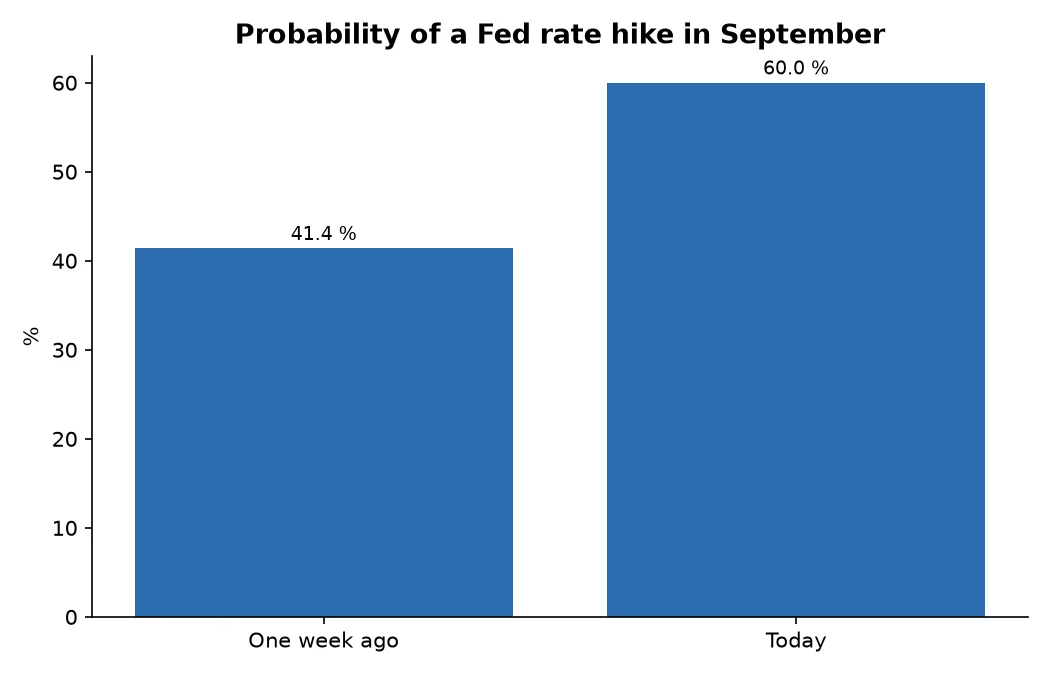
The Fed chair delivered notably firm remarks during his first Jackson Hole symposium appearance the prior week, stating that policymakers stand ready to act if inflation fails to converge on the central bank’s 2% target. Market-implied odds of a rate increase at the upcoming September meeting jumped to above 60%, up dramatically from 41.4% just seven days earlier, according to futures market data.
Analysts noted that the burden now rests on the Fed chair to follow through on the hawkish signal, or risk eroding the credibility gained during the symposium. The ambiguity is heightened by conflicting economic signals: consumer price data from July showed moderate pressure, yet the Fed’s preferred inflation metric came in hotter than expected.
The upcoming monthly jobs report, scheduled for September 4, could prove decisive. The Fed chair highlighted that recent data does not show meaningful improvement in underlying economic trends, raising the stakes for the labor market figures.
Major indexes slide at the open
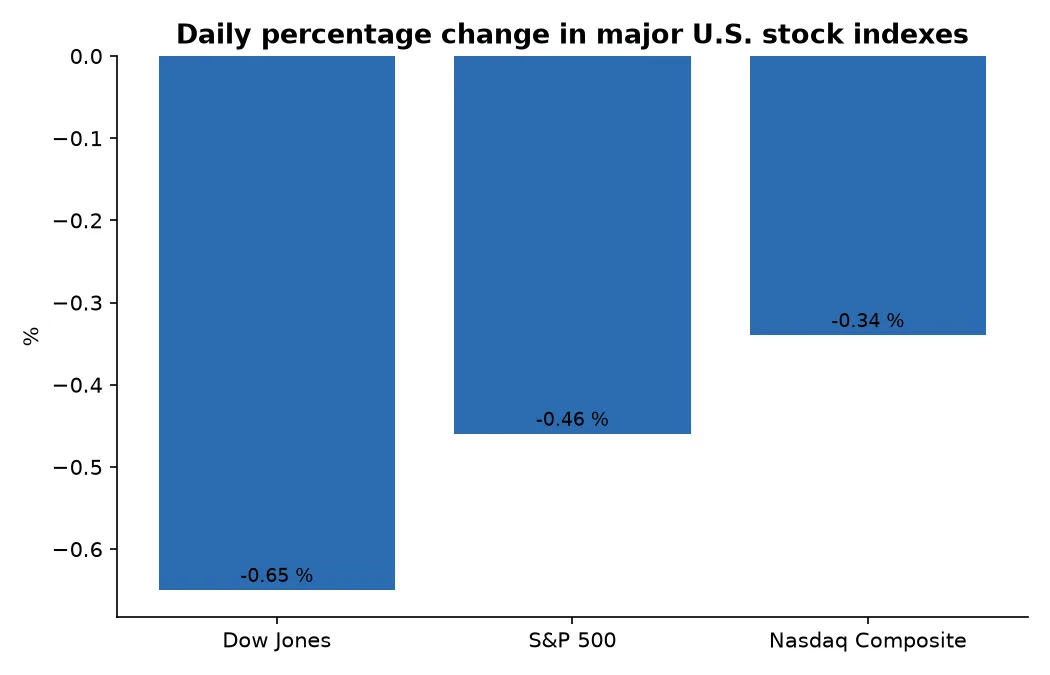
By midday, the Dow Jones Industrial Average dropped 346.30 points, or 0.65%, to 53,210.80. The S&P 500 declined 35.66 points, or 0.46%, to 7,676.10, while the Nasdaq Composite fell 88.98 points, or 0.34%, to 26,312.74.
Despite the daily losses, the broader monthly picture offers some relief. Both the S&P 500 and the Nasdaq were positioned to end two straight months of declines, while the Dow was on pace for a fifth consecutive monthly gain.
Sector movers and market breadth
Sector performance was mixed. Energy shares rose 0.97% as Brent crude advanced 1.04%. A utility stock dropped 1.19% after a legislative amendment in California left grid operators largely exposed to wildfire liabilities. Semiconductor names were mostly higher, with one index component up 1.13%, Sandisk gaining 3.75%, and Qualcomm adding 2.49%.
GameStop climbed 4.5% after announcing it would cover roughly 27% of a previously disclosed $1.4 billion debt exchange using cash on hand rather than issuing new shares, preventing further dilution.
Market breadth tilted firmly negative, with declining stocks outnumbering gainers by a 2.26-to-1 ratio on the New York Stock Exchange and a 2.1-to-1 ratio on the Nasdaq.