


A Surprise Winner in the Race for Crypto Fees
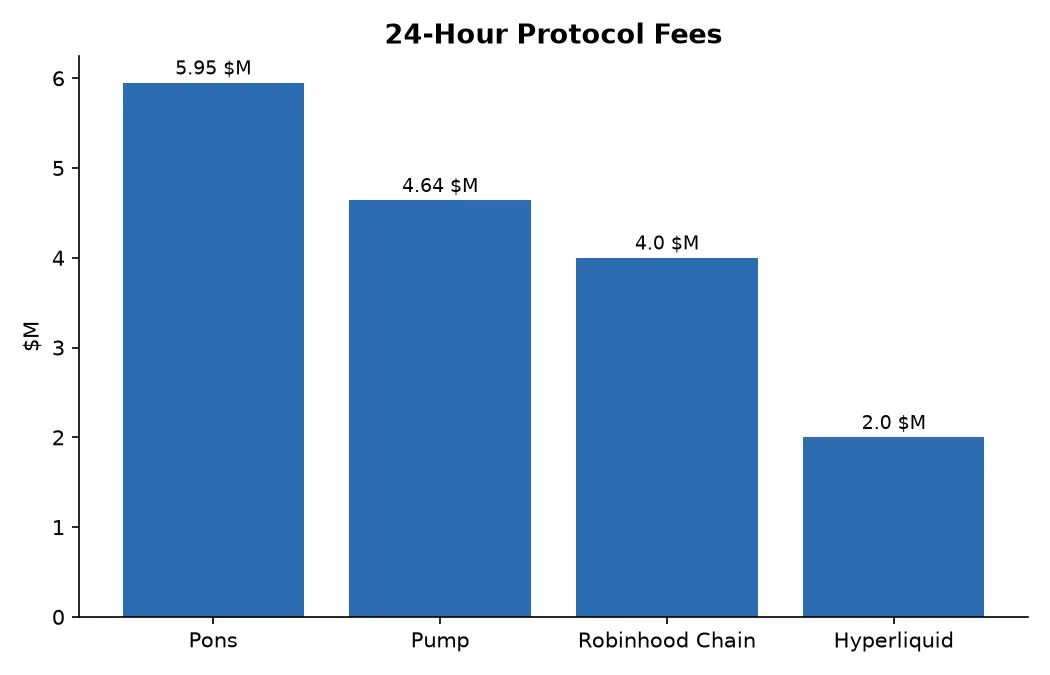
The app, called Pons, collected roughly $5.95 million in fees over a single 24-hour window, placing it behind only three established protocols — Tether, Uniswap, and Circle — and ahead of Pump, which generated about $4.64 million over the same period.
The sheer scale of this fee generation is striking because Pons is not an old, battle-tested DeFi protocol. It is a lightweight tool that lets anyone name a token, pay a small launch fee of around $1, and immediately open a trading market on Robinhood Chain. The model is simple, but the volume it has attracted is anything but.
On a single day earlier this month, nearly 25,000 new tokens were created through the platform — a roughly 19% jump from the previous day — while trading volume topped $544 million in 24 hours. Since the blockchain went live in July, the platform has helped produce around 646,000 tokens drawn from more than 167,000 unique creator wallets.
How a Simple App Redirected an Entire Blockchain’s Activity
Robinhood Chain was introduced with tokenized stocks as its marquee feature. Yet the data tells a different story: user-created tokens and memecoins have become some of the heaviest drivers of usage and fee revenue on the network.
The blockchain itself captured approximately $4 million in fees during the same 24-hour stretch, while Hyperliquid, a major perpetuals trading venue, added roughly $2 million. Wednesday alone accounted for nearly one-fifth of all fees the chain has accumulated since launch, pushing its lifetime total close to $20 million.
The Economics Behind the Frenzy
Pons earns a share of every trade executed through tokens it launched, with proceeds split between the protocol and the token creators. That means revenue depends not just on how many tokens are minted, but on how much they trade afterward.
The project’s documentation indicates that most of the protocol’s retained funds are used to purchase and burn its native PONS token. This mechanism creates steady buying pressure while shrinking supply — a dynamic that likely fueled a roughly 300% price increase over the past week. Onchain records show that approximately 293 million PONS tokens, representing about 29% of the original supply, have already been removed from circulation.
What This Means for Robinhood’s Bottom Line
Despite the headline-grabbing fee figures, the actual revenue flowing to Robinhood as a company is considerably smaller. The firm’s CFO noted on its second-quarter earnings call that the company earns only a few basis points per transaction — not per trading volume — and shares roughly half of that with Arbitrum, the network’s underlying infrastructure provider.
Still, the strategic win for Robinhood may lie in transaction count rather than dollar volume. By opening its blockchain to outside developers, the company created conditions for applications it had not necessarily anticipated — and those applications have become major engines of activity. The more transactions memecoins generate, the more fee opportunities Robinhood captures, even if the per-transaction cut is modest.
Robinhood’s stock climbed 3.4% to close at $106.99 on Wednesday and then jumped roughly 15% the following day, outpacing most crypto-related equities as bitcoin moved toward the $80,000 mark. A major Wall Street firm upgraded the stock this week, pointing to broad-based growth across the company’s product range rather than anything tied specifically to the blockchain.
Token Values Concentrated in a Handful of Names
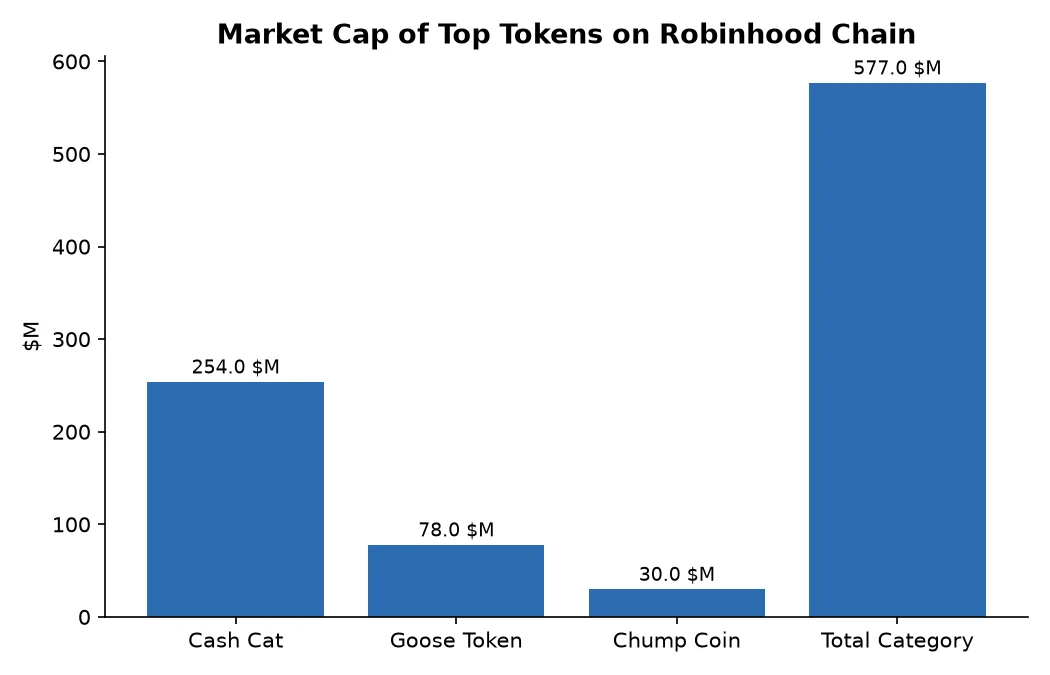
The memecoin ecosystem on Robinhood Chain remains heavily concentrated. The largest native token, Cash Cat, carries a market value of roughly $254 million, followed by Goose Token at close to $78 million and Chump Coin at about $30 million. Together, the entire category of user-created tokens is valued at approximately $577 million, meaning a small number of names hold the lion’s share of the ecosystem’s worth despite hundreds of thousands of launches.
The surge in memecoin-driven activity underscores a broader trend: when permissionless platforms lower the barrier to entry, speculative communities can generate fee revenue that rivals — and sometimes surpasses — that of legacy protocols. Whether this momentum sustains itself will depend on how long traders keep creating and swapping these tokens, and whether Robinhood can convert that transactional energy into lasting revenue.