


The Dominance of Passive Investing
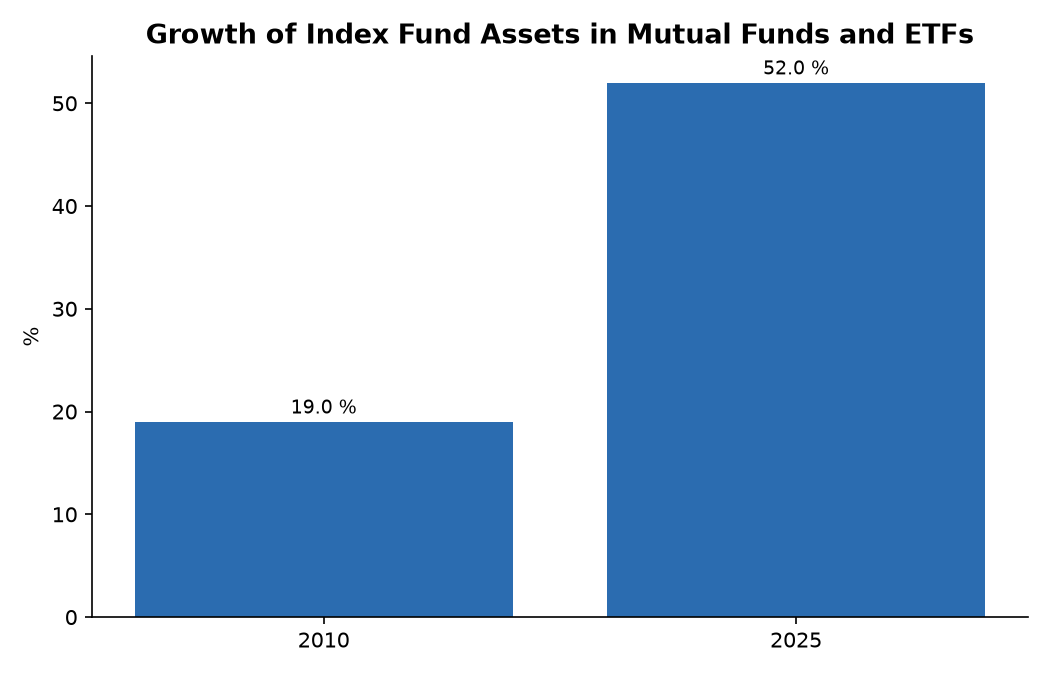
For years, the financial world has seen a massive migration toward index funds. These vehicles, which use algorithms to replicate specific market categories, have become the cornerstone of modern portfolios due to their low costs and consistent performance relative to their benchmarks. The shift is undeniable: in 2010, index-based securities accounted for only 19% of total mutual fund and ETF assets, but by the end of 2025, that figure had surged to 52%.
In the U.S. equity market, the trend is even more pronounced, with index funds now controlling approximately 63% of all assets. This growth was largely fueled by aggressive fee reductions from major providers, making the cost of passive exposure nearly negligible.
The Challenge of Beating the Market
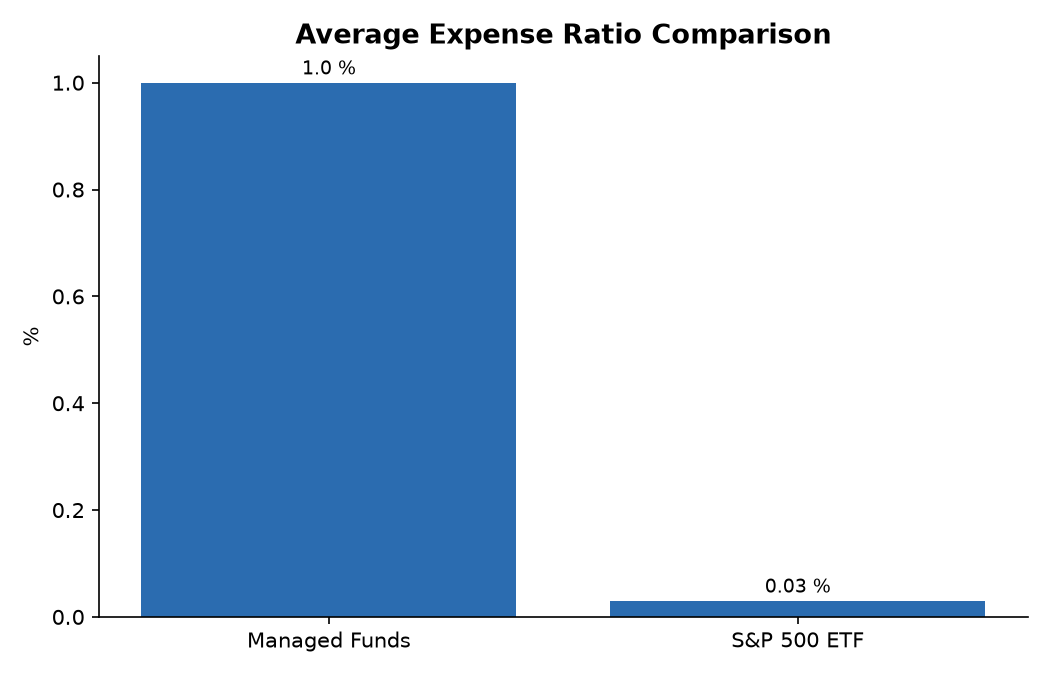
The primary hurdle for human fund managers is the ‘efficiency’ of the market. If stock prices accurately reflect all available information, finding undervalued assets becomes a monumental task. Furthermore, active managers must overcome the inherent disadvantage of higher expense ratios. On average, managed funds charge around 1%, whereas leading S&P 500 ETFs can operate as low as 0.03%.
Data suggests that the difficulty of consistent outperformance is reflected in long-term trends. For instance, over a decade ending in late 2025, only 3.6% of large-cap growth funds managed by humans managed to outperform their index counterparts. The difficulty is compounded by the ‘egression to the mean’ effect: studies have shown that many funds appearing to outperform the market in a single year often fail to maintain that lead after two or four years.
Where Active Management Wins
Despite the statistical odds, active management offers two distinct advantages that index funds cannot replicate:
- Alpha Generation: By definition, an index fund is designed to track, not beat, its benchmark. Active managers, however, have the potential to generate returns that exceed the market average through strategic stock selection.
- Strategic Conviction: Skilled managers can take concentrated positions in high-conviction assets, such as early investments in major technology leaders or specialized sector plays, which can drive significant outperformance.
Successful active management often relies on managers with long-standing track records and the courage to maintain contrarian views. Whether it is a family-run firm or a veteran analyst with decades of experience, the ability to hold high-conviction stocks through market volatility remains a powerful tool for generating superior returns.